



Automatic gates are an essential part of modern properties. They provide security, convenience, and control over who enters and exits your space. Whether installed at a residential home, commercial facility, or industrial site, a properly functioning gate system plays a critical role in daily operations.
But when something goes wrong, it’s rarely a simple issue.
A gate that won’t open, closes halfway, makes unusual noises, or stops responding altogether often signals deeper problems within the system. That’s where professional troubleshooting comes in. Understanding how complete gate system troubleshooting services work can help you see why they are essential for long-term performance and reliability.
The First Step: Understanding the Problem
Every troubleshooting process begins with identifying the issue.
Unlike quick repairs that focus on visible symptoms, professional technicians take a broader approach. They don’t just look at what’s broken—they look at why it’s happening.
Gate systems are made up of multiple components working together. These include motors, sensors, tracks, control panels, power supplies, and access systems. When one part fails, it can affect the entire system.
The first step is gathering information. Technicians may ask questions about when the problem started, how often it occurs, and whether there were any recent changes or events that might have triggered it.
This initial understanding sets the stage for a more accurate diagnosis.
Full System Inspection
Once the issue is identified, technicians perform a comprehensive inspection.
This is where troubleshooting goes beyond basic repair. Instead of focusing on a single component, the entire gate system is examined.
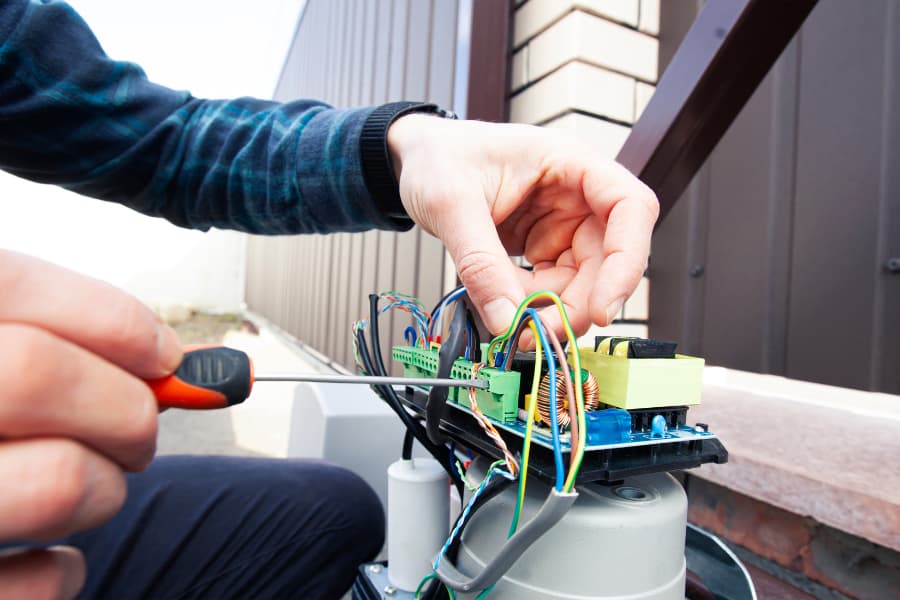
They check mechanical parts like hinges, rollers, and tracks to ensure they are aligned and functioning properly. Electrical components such as wiring, circuit boards, and power connections are also inspected for faults or damage.
Sensors and safety features are tested to confirm they are working correctly. These elements are especially important because they prevent accidents and ensure smooth operation.
By evaluating the entire system, technicians can identify hidden issues that may not be immediately visible.
Diagnosing Electrical and Mechanical Issues
Gate systems rely on a combination of electrical and mechanical processes.
Electrical problems might include faulty wiring, power supply issues, or malfunctioning control boards. These can cause the gate to stop responding or behave unpredictably.
Mechanical issues, on the other hand, often involve wear and tear. Components like tracks, hinges, or motors may become misaligned, damaged, or worn out over time.
Professional troubleshooting involves isolating these issues and determining their exact cause. This ensures that repairs are not just temporary fixes but long-term solutions.
Testing Gate Automation and Access Controls
Modern gates often include advanced features such as remote access, keypads, intercom systems, and smart integrations.
When these systems fail, it can disrupt both convenience and security.
Technicians test all access control features to ensure they are functioning properly. This includes checking remote signals, keypad inputs, and communication systems.
If there are connectivity issues or programming errors, they are corrected during this stage.
This step ensures that the gate system not only works mechanically but also integrates seamlessly with its control systems.
Identifying Safety Risks
Safety is a critical part of any gate system.
Faulty sensors, broken components, or improper alignment can create serious hazards. A gate that closes unexpectedly or fails to detect obstacles can pose risks to people and property.
During troubleshooting, technicians carefully inspect all safety mechanisms. They ensure that sensors detect movement correctly and that emergency stop features are operational.
Addressing these risks is just as important as fixing the primary issue.
Providing Targeted Solutions
After completing the inspection and diagnosis, technicians develop a plan to fix the problem.
This is where the value of a comprehensive approach becomes clear.
Instead of applying a quick fix, they address the root cause of the issue. This may involve repairing damaged components, replacing worn parts, or adjusting system settings.
In some cases, they may recommend upgrades if certain parts are outdated or beyond repair.
By focusing on long-term solutions, they help prevent recurring problems.
On-the-Spot Repairs and Adjustments
One of the key advantages of professional services is efficiency.
Many technicians carry common replacement parts and tools, allowing them to perform repairs on the spot. This reduces downtime and ensures that your gate system is restored as quickly as possible.
Adjustments are also made to improve overall performance. This might include aligning tracks, calibrating sensors, or fine-tuning motor settings.
These small improvements can make a big difference in how smoothly the system operates.
Preventative Recommendations
Troubleshooting doesn’t end with fixing the immediate problem.
Experienced technicians also provide recommendations to prevent future issues. This may include routine maintenance, lubrication schedules, or tips for proper usage.
They might also identify potential weak points in the system that could lead to problems later on.
By addressing these concerns early, you can avoid costly repairs and extend the lifespan of your gate system.
Why a Complete Approach Matters
It’s easy to underestimate the complexity of a gate system.
What appears to be a simple malfunction can often have multiple underlying causes. Without a thorough approach, these issues can go unnoticed and continue to create problems.
This is why complete gate system troubleshooting services are so important.
They go beyond surface-level fixes and provide a comprehensive solution that ensures reliability, safety, and long-term performance.
Restoring Security and Convenience
A properly functioning gate system offers more than just convenience—it provides peace of mind.
When your gate works as it should, you can trust that your property is secure and accessible when needed. You don’t have to worry about unexpected failures or safety risks.
Professional troubleshooting restores that confidence by ensuring every part of the system is working correctly.
Final Thoughts
Gate systems are complex, and when problems arise, they require more than a quick fix.
A complete troubleshooting process involves inspection, diagnosis, repair, and prevention. It addresses both visible issues and hidden problems, ensuring that your system operates smoothly and safely.
By investing in a thorough approach, you not only solve current issues but also protect your system from future breakdowns.
In the end, it’s not just about fixing a gate—it’s about maintaining the security, efficiency, and reliability of your entire property.