




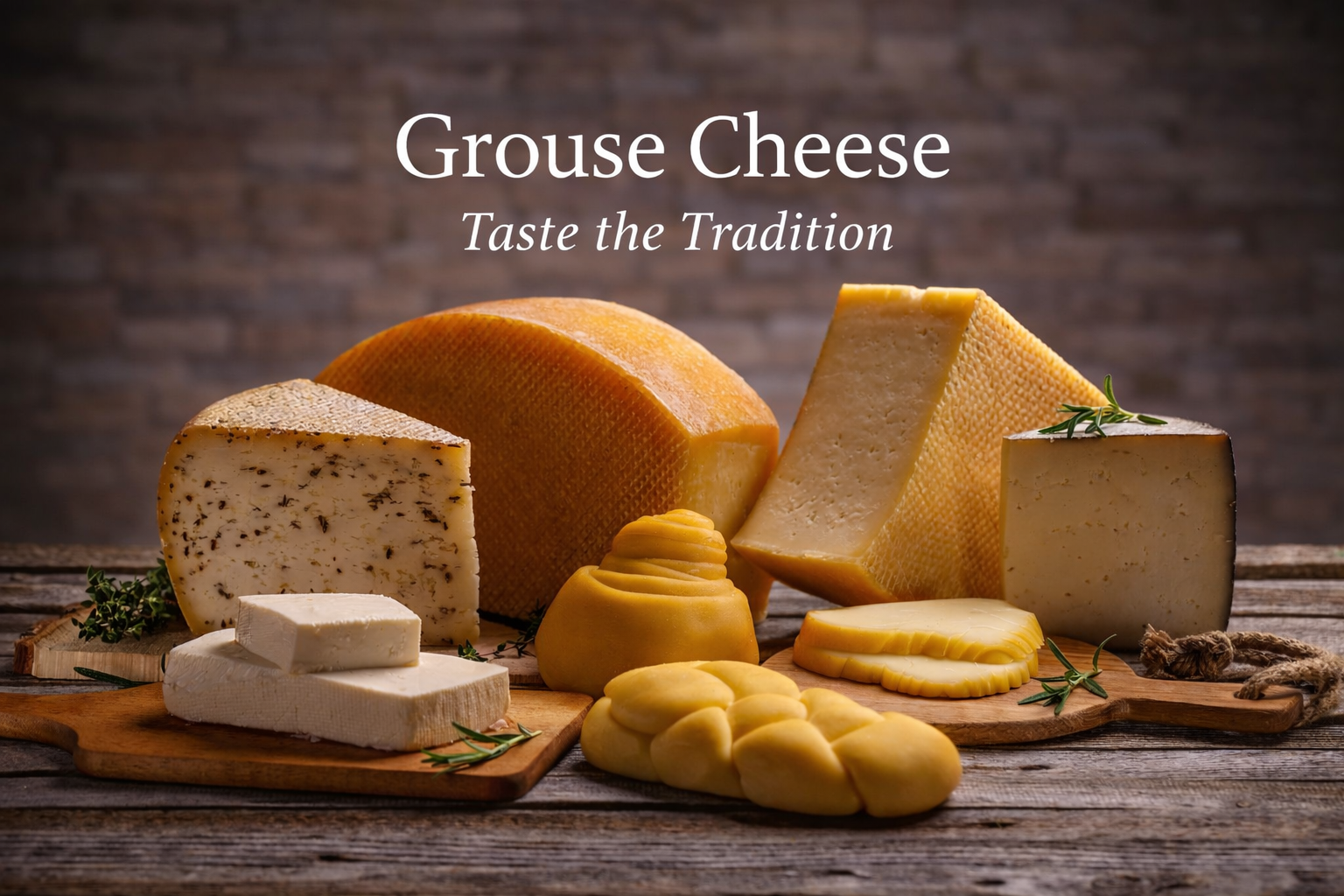
Grouse cheese is one of the most intriguing and under-the-radar artisan cheeses available today. Although it doesn’t contain grouse meat or bird products, the name evokes a rugged highland terroir and centuries-old cheesemaking traditions. From its distinctive origin story to its complex flavors, culinary versatility, and growing global appeal, this guide covers everything you need to know about grouse cheese — and why it deserves a place on your cheese board.
What Is Grouse Cheese?
Grouse cheese is a semi-hard, artisan dairy product traditionally made from raw or lightly pasteurized milk — most often sheep’s milk or a mix of sheep and goat milk. Despite what the name might imply, it contains no meat or bird ingredients; rather, the name comes from the grouse-inhabited moorlands and highlands where grazing animals feed on wild herbs and grasses, imparting the cheese with a unique terroir-infused character.
Unlike mass-produced cheeses such as cheddar or mozzarella, grouse cheese is crafted in small batches, often fewer than 500 wheels per season, using traditional methods that have changed little over generations.
Key Characteristics
- Milk Source: Sheep, goat, or blended milk
- Texture: Semi-hard to firm, sometimes supple
- Flavor: Earthy, herbal, sometimes smoky and nutty
- Appearance: Natural rind with golden-amber interior
- Production: Artisanal, small-batch cheesemaking
The Origins and History of Grouse Cheese
Grouse cheese doesn’t trace back to a single village or cheesemaker. Instead, it emerged across scattered highland regions of Northern Europe — including Scotland’s rugged moors, the French Vosges, alpine Italy, and parts of Austria and Slovenia — where isolated communities developed practical ways to preserve milk before refrigeration.
A Cheese Born of Terrain and Necessity
High elevation, unpredictable weather, and sparse markets forced local farmers to innovate. Milk had to be preserved for months, and cheese — a portable, long-lasting form of dairy — was the solution. These cheesemaking communities relied on natural fermentation, local vegetation, and cave or cellar aging to create distinctive flavors that reflected their environment.
Why “Grouse”?
While the cheese contains no grouse meat, the name reflects the shared habitat of grouse birds and grazing livestock. The moors and heather fields where grouse thrive are the same landscapes that feed sheep and goats whose milk becomes this cheese. Over time, the connection between the cheese and the highland terrain became part of its identity.
Milk Source and Ingredients Used in Grouse Cheese
The distinctiveness of grouse cheese begins with the animals that produce the milk.
Sheep, Goat, and Mixed Milks
Many traditional versions of grouse cheese use:
- Sheep’s milk — rich, fatty, and nutty
- Goat’s milk — tangy and herbal
- Blended milks — complex flavor combinations
Sheep and goats in highland regions feed on wild vegetation — herbs, lichen, moor grasses — which contributes floral, earthy, and terroir-specific tastes to the milk. This biodiversity in fodder is a primary reason grouse cheese tastes unlike industrial dairy cheeses.
Natural Enzymes and Rennet
Traditional grouse cheese often uses natural rennet — sometimes derived from plants like cardoon thistle or dried nettle — for coagulation, which can contribute subtle differences in texture and flavor from batch to batch.
How Grouse Cheese Is Made (Step-by-Step Production Process)
The production of grouse cheese is a labor-intensive process that reflects centuries-old cheesemaking knowledge. The journey from milk to wheel involves multiple critical stages.
1. Milk Collection and Quality Control
Fresh milk must be collected carefully — often at dawn — and used quickly to preserve its natural enzymes and beneficial microflora. In traditional settings, milk is not always pasteurized, which allows native microbes to influence flavor.
2. Coagulation
Rennet or plant-based coagulating agents are added to the warmed milk, transforming it into curds. This process can take more time in cooler climates, but it yields richer, more nuanced textures than rapid industrial methods.
3. Cutting and Stirring Curds
Once curds form, they are cut into specific sizes. Smaller curds release more whey and result in firmer cheese, while larger curds retain moisture for a softer texture.
4. Draining and Pressing
Curds are gently stirred, drained, and pressed into molds wrapped with cloth or placed under weights. This shapes the cheese and expels excess whey, influencing texture and density.
5. Salting
Salting may occur either by dry rubbing or brining, enhancing flavor and aiding preservation. The method and amount of salt can subtly affect the cheese’s final taste.
6. Aging and Maturation
Young grouse cheese can be aged for a few months, while premium reserves may mature for 12–18 months in cellars or caves. Natural humidity and temperature fluctuations help deepen flavor and build complexity in the rind.
Aging Techniques and Variations of Grouse Cheese
Fresh vs. Aged
- Young wheels (3–6 months) tend to be more elastic and creamy, ideal for melting.
- Aged wheels (12–18+ months) develop a firmer, crumbly texture and sharper taste.
Natural Rind and Environmental Influence
As the cheese ages, a natural rind forms. This can be brushed with peat ash or herbs in some traditions, contributing additional aromatic layers. These mold cultures are not flaws but part of the cheese’s character.
Flavor Profile of Grouse Cheese
Describing grouse cheese’s flavor is an exercise in terroir appreciation. Its character is shaped by grazing conditions, milk blend, aging, and microbial activity.
Taste Notes
- Earthy and herbal — echoes moorland flora
- Nutty and savory — particularly with sheep’s milk
- Smoky or game-inspired hints — depending on aging environment
- Tangy sharpness — in older wheels
Texture and Mouthfeel
Younger grouse cheese is smooth and supple, while longer-aged batches become dense and sometimes slightly crumbly — yet all retain a firm, satisfying body.
How to Use Grouse Cheese in Cooking
Grouse cheese’s bold profile and versatile texture make it ideal in a wide range of culinary contexts.
Cold Dishes and Boards
- Sliced on charcuterie boards with cured meats.
- Paired with fresh fruit, nuts, or honey for a balance of sweet and savory.
Warm and Melty Uses
- Grated over risottos, pastas or gratins.
- Melted into rustic dishes like wild mushroom polenta.
Baking and Pastries
- Used in tarts, turnovers, or savory pastries for depth and richness.
Best Food Pairings with Grouse Cheese
Fruits & Snacks
- Pears, figs, apples
- Almonds, walnuts
- Crusty artisanal bread
Savory Complements
- Roasted lamb or chicken
- Wild game dishes
Wine and Drink Pairings for Grouse Cheese
Understanding how wine interacts with grouse cheese can elevate your tasting experience.
Best Wines for Young Cheese
- Crisp whites such as Sauvignon Blanc or sparkling wines provide refreshing acidity that cuts through creaminess.
Best Wines for Aged Cheese
- Medium-bodied reds like Pinot Noir or Merlot complement sharper edges and earthy notes.
Sparkling ciders and herbaceous ales also pair beautifully with grouse cheese’s rustic profile. (General cheese-pairing principles applied.)
Nutritional Value and Health Benefits of Grouse Cheese
While artisan cheeses can vary by recipe and milk source, traditional grouse cheese typically offers:
Typical Nutrient Breakdown per 30 g (approx.)
- Calories: 110–130 kcal
- Protein: 6 g
- Fat: 8–10 g
- Calcium: ~180 mg
Sheep and goat milks are often easier to digest than cow’s milk for people with mild lactose sensitivities — a reason why many cheese lovers favor artisanal cheeses like this.
Sustainability and Ethical Cheesemaking Practices
Many artisanal grouse cheese producers adhere to ethical and eco-conscious principles:
- Local sourcing reduces transport emissions.
- Grass-fed livestock enhances animal welfare and flavor quality.
- Biodegradable packaging and water-saving techniques are increasingly common.
This commitment reflects broader trends in farm-to-table eating and sustainable dairy farming.
Modern Popularity and Market Trends
Grouse cheese remains a rare specialty item, not widely available in supermarkets. However, it is gaining visibility in:
- Specialty cheese shops in major cities
- Fine dining restaurants
- Cheese festivals and artisan markets
Its resurgence is part of a larger global appreciation for heritage and terroir-driven cheeses that celebrate place and tradition.
Where to Buy Grouse Cheese
Because production is small-scale:
- Local artisan cheese shops are your best first stop.
- Farmers’ markets sometimes carry seasonal batches.
- Some online retailers ship specialty cheeses worldwide.
If you can’t find it locally, contacting boutique importers or cheesemongers who specialize in European artisan cheeses is often effective.
How to Store and Serve Grouse Cheese Properly
Storage Tips
- Wrap in wax or parchment paper to allow the cheese to breathe.
- Place in the cheese drawer of your refrigerator.
- Use an airtight container if humidity is high.
Serving
- Remove from fridge 30–60 minutes before serving — this brings out the full flavor.
- Use a dedicated cheese knife for clean cuts.
Common Mistakes to Avoid
- Over-refrigerating — too cold dulls flavor.
- Storing in plastic wrap — traps moisture and harms texture.
- Pairing with overly sweet wines — can clash with earthy notes.
Frequently Asked Questions About Grouse Cheese (FAQs)
Q: Is grouse cheese made from birds?
A: No — the name refers to the habitat, not ingredients.
Q: Is it rare?
A: Yes — production is small and regional.
Q: How long is it aged?
A: From a few months up to 18+ months, depending on style.
Q: Can it be used in cooking?
A: Absolutely — from boards to baked dishes.
Final Thoughts – Why Grouse Cheese Deserves a Place on Your Table
Grouse cheese is more than a dairy product — it’s a culinary legacy of place, people, and pastoral tradition. Its earthy flavors, artisanal craftsmanship, and terroir-inspired complexity make it a standout among specialty cheeses.
Whether enjoyed on its own, paired with wine, or incorporated into gourmet dishes, grouse cheese offers a richly rewarding tasting experience that reflects centuries of cheesemaking wisdom and the wild beauty of the landscapes that shaped it.
ALSO READ: Joguart – The Ultimate Guide to Modern Yogurt Evolution