



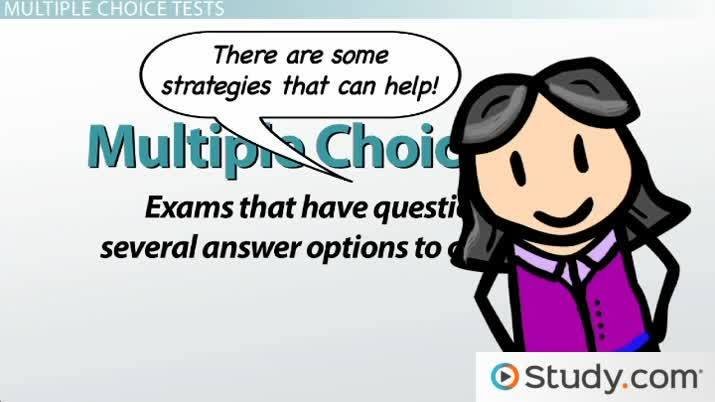
The experience of a Canvas quiz can vary quite a lot depending on the kind of question you are looking at. A multiple-choice question that seems like an easy layup but presents two very similar choices.
Many terms appear related, but in a matching question this can be misleading. Short-answer questions present a unique challenge, as the student must compose the response on their own.
Having an idea of the type of question you’re dealing with before you go for it will also help you choose a better way to solve it.
A Canvas Answer Finder can provide a nice crutch if you are struggling to understand a challenging question, but the most important skill is to read the question and see what it is asking and whether your answer fits into that.
Why Question Type Matters
We must realise when not to approach a quiz question in the same way.
In the case of multiple choice questions, generally, your job is to compare the options that are available. In matching questions, we need to link the different ideas correctly. Short answer questions require extensive recall and articulation.
Knowing the format gives you an entry point. Before searching for an answer, enable yourself to take a few seconds just to comprehend what the question is actually asking.
A question that might be helpful to start with is:
- What, in fact, is the question asking?
- What do I already know?
- Which pieces of information in the question matter?
- What type of response does this format demand?
Those few seconds of hesitation can stop you from being careless.
How to Handle Multiple Choice Questions?
Multiple choice questions generally provide you with a few options for answers. It is not that the subject is always a challenge in the learning process. Or the challenge can be choosing between two nearly comparable options.
Read the question before checking the options
Understanding the Question Before Reading Choices: Look for words that signal significance, such as: best · most probably · just the main part · except (but) · not
These words can dramatically transform what the question is seeking.
A question might ask for the most likely explanation, as opposed to all explanations that are technically correct. Your aim should be to answer the actual question and not select an option which is only related to the topic.
Remove Clearly Wrong Answers
If you are unsure, begin removing bad options.
Look for choices that:
- Contradict the question
- Belong to a different concept
- Ignore an important detail
- Are too broad or too narrow
- Do not appropriately address what was actually asked
The comparisons become simpler once the weakest selections are eliminated.
Watch for Familiar-Looking Answers
One of the mistakes is to select a choice simply because it has some words that you recognize from your regimen. Just because the wording sounds familiar doesn’t mean that makes an answer right.
See if the entire statement makes sense in the context of this question.
How to Approach Matching Questions
Matching questions assess your ability to pair related information. They could consist of terms on one side and definitions, examples, people, events, or concepts on the other.
The easiest way to deal with a tricky matching pack is systematically.
Start With the Obvious Matches
Try not to take too long on the hardest pair first. Seek the relationships you are familiar with and approach them with confidence.
If the course instructions permit, use mental or paper note boxes. This minimizes your consideration set for the rest.
Look at the Full Definition
Do not use a word in common you are familiar with.
That is, two definitions may reference the same general topic but refer to different concepts. Read the whole definition and search for the distinguishing feature that separates one idea from another.
Use the Remaining Options Carefully
To this end, go through with the confident matches, and check what remains. At other times, the remaining options are much more recognizable.
But at the same time, don’t think that because that is the last option available to you, it must be right. Recheck the whole question before posting
Short answer questions: how to do this.
Short-answer questions are more cerebral because there won’t necessarily be a list of options to help you out.
Step one: Identify the exact task. So, is the question asking you to define something → explain why something happens → compare/contrast two ideas → give an example?
You should respond to that task.
Frame the Answer Around the Focus
If the question is wanting an explanation, start with the answer. Then, add any details necessary to substantiate it.
For example:
Takeaway → explanation (2-3 sentences) → example
It allows for a follow-up to your response and makes it easier to double-check right before you hit print.
Use Course Terminology Carefully
Use the correct term that a course may teach you instead of a generic description for it.
Do not at the same time matisse up your expression for impressing short answers purpose. Clear wording is usually easier to review but also less prone to hiding an imprecise idea.
What to Do When You Are Stuck
Just because you got stuck on a quiz question does not mean you need more information. Most of the time, it is just how the question has been posed.
For example, identify:
- The topic
- The task
- Important conditions
- The expected answer format
Then, summarize the question in your own words.
A study tool like a Canvas Answer Finder can also help you sort through a question that doesn’t make sense when looking at it the first time. Letting you win at watching is not the useful bit. It means understanding why that answer matches the query.
Common Mistakes to Avoid
One of the easiest ways to lose points on otherwise low-hanging-fruit questions is to rush.
Do not change an answer many times for no reason. If you discover proof that your first selection was false, trade it. However, if you change an answer just because you are nervous, then it will result in mistakes that arise unnecessarily.
Do not ignore exceptions like “except” or “not.” These trigger words sometimes change the meaning of an entire question.
Notes for matching questions: You can ignore the first word for a definition. Short answers – Do not write a long response to the short answer question asking for just a simple definition.
Easiest review process before submission
Before quizzing yourself, utilize the extra time to analyze strategically.
For multiple choice questions, check if you selected the correct answer here.
For matching questions, pairs should exist between pairs.
Verify that your reply responds to every element of the prompt if you are providing a short answer.
For example, if you studied using a Canvas Answer Finder (or another study resource) before taking the coursework, look at how your explanation compares with what you used in class. It is still best to keep your course notes, assigned readings, and instructor guidance as the primary reference for learning the material.
Final Thoughts
Canvas question types differ and so do the treatments needed for each. Multiple choice questions reward deliberate comparison. Matching questions ask you to be attentive about relationships and definitions. Brief answer questions necessitate straightforward recall and limited narrative.
It is not about going quickly through all the questions. This is about acknowledging what the question demands and applying a technique that suits the nature of the format. When a problem is confusing to you, slow down, figure out exactly what task needs solving in that moment (and do that next), cut weak possibilities from your list of legal choices, check yourself for mistakes or trash assumptions, and then keep going but less than you were before.
The key is to associate these small habits with consistent practice that makes quizzes more manageable and allows you to deepen your understanding of the content from which each question stems.