



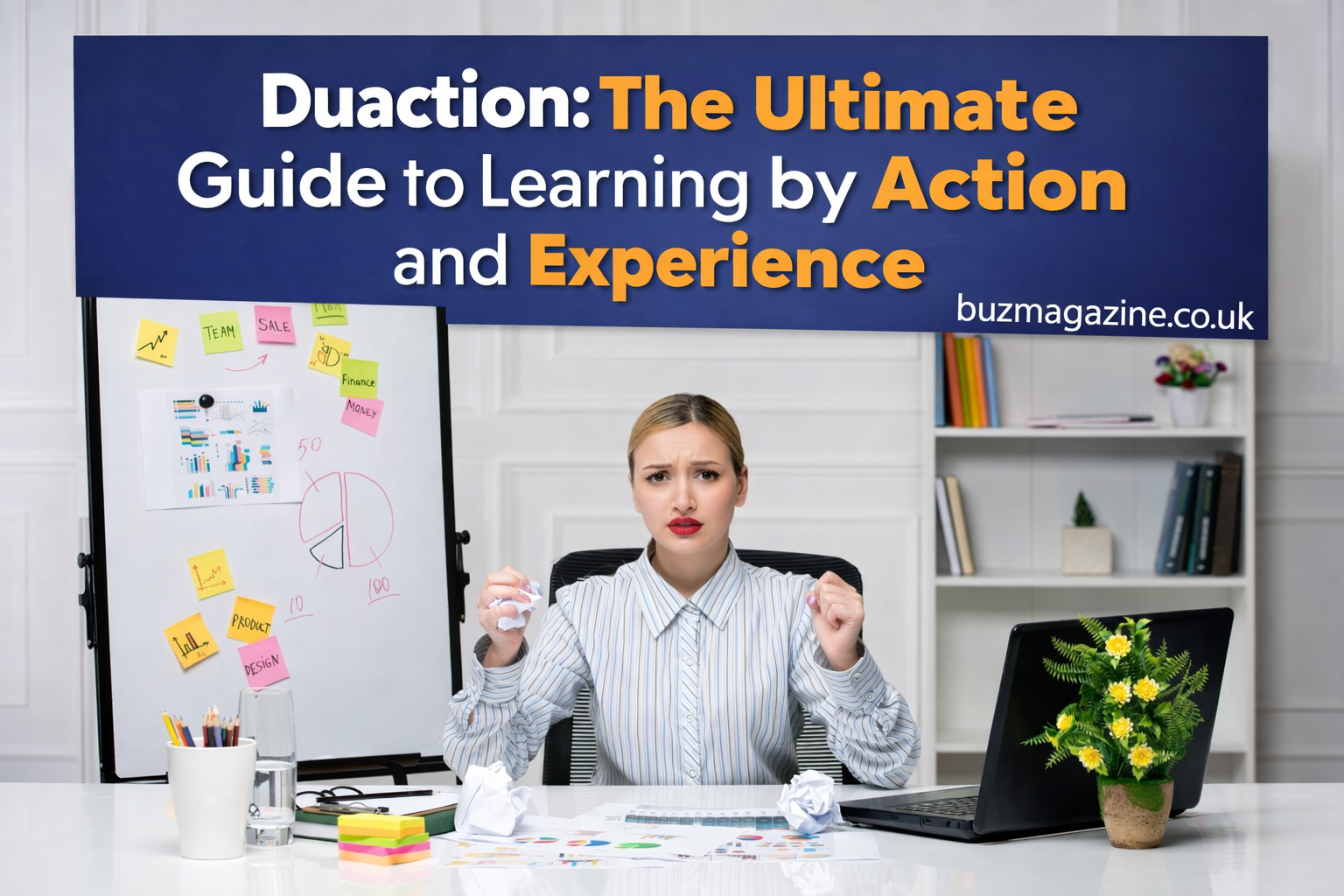
In an era defined by rapid change and evolving industries, traditional learning models are increasingly seen as insufficient on their own. Today’s learners and professionals need more than textbook knowledge — they need real-world experience, problem‑solving skills, and adaptability. This is where Duaction comes in: a transformative strategy that blends education, action, and reflection to create a dynamic, practical, and deeply engaging learning experience.
Whether you’re a student bridging the gap to employment, a worker seeking advancement, or an organization aiming to cultivate top talent, Duaction offers a powerful framework for skill development and success.
This comprehensive guide explores every facet of Duaction — its definition, benefits, real‑world programs, challenges, workplace integration strategies, and future potential.
1. Introduction: Why Duaction Matters in Today’s World
In the 21st century, the world of learning and work has changed. The digital age, global competition, and automation demand that workers be lifelong learners — people who constantly update their skills throughout their careers. However, traditional classroom instruction often falls short in preparing learners for real challenges. This gap between education and practical application creates a mismatch in skills that employers frequently cite as a concern.
Enter Duaction — a hybrid learning model that combines theory with real‑world action, followed by reflection and refinement. Duaction breaks down the walls between academic learning and practical experience, enabling learners to apply, analyze, and adapt knowledge in real settings.
This approach isn’t limited to students; it extends to professionals, educators, and organizations seeking to remain competitive. At its core, Duaction increases learning relevance, cultivates critical skills, and drives measurable outcomes in career readiness and productivity.
2. What is Duaction? Understanding the Concept
Duaction is built on a simple but powerful idea: learning should be active, not passive. Instead of merely absorbing information, learners engage directly in experiences that require them to apply concepts, solve real problems, and reflect on outcomes.
Unlike traditional education where learners watch, listen, or memorize, Duaction emphasizes:
- Action — doing tasks, projects, or work that mirrors real‑world scenarios
- Reflection — analyzing what happened, how it happened, and what can be improved
- Application — transferring knowledge to new contexts or challenges
This cycle — learn, do, reflect, refine — is rooted in experiential learning theory and is shown to dramatically enhance knowledge retention and skill mastery. Studies show experiential learners retain significantly more than those in passive environments, with hands‑on experience improving retention up to 80–90%, compared with just 10–20% for traditional lectures.
Duaction vs Traditional Learning
| Aspect | Traditional Learning | Duaction |
| Knowledge flow | Passive (presented by instructor) | Active (learner engaged in real tasks) |
| Application | After course ends | Built in from the start |
| Reflection | Limited or optional | Integral to the process |
| Skill readiness | Often theoretical | Job‑ready and practical |
| Engagement | Dependent on delivery style | Inherently high due to tasks |
This structural difference makes Duaction especially effective for learners seeking career readiness, skill transfer, and meaningful engagement.
3. How Duaction Works: Action, Reflection, and Application
Duaction follows a dynamic cycle that integrates doing with learning:
Action: Learning Through Doing
Action forms the heart of Duaction. Learners engage in real or simulated tasks that mirror actual work environments. These can include:
- Internships and co‑ops
- Project‑based assignments
- Field work or lab simulations
- Collaborative team tasks
These experiences force learners to apply theory in contexts where outcomes matter — not just for grades, but for performance.
Reflection: Turning Experience into Insight
After action comes reflection — a deliberate process of examining what worked, what didn’t, and why. This is crucial because it transforms experiences into lasting knowledge. Learners ask:
- What did I do well?
- What problems did I encounter?
- What could I do differently next time?
This deep thinking reinforces learning and builds metacognitive skills — the ability to evaluate and improve one’s own learning strategies.
Application: From Learning to Impact
Reflection alone isn’t enough. The final step is applying those insights in future tasks or real work situations. This leads to continuous improvement and deeper confidence in one’s abilities.
Together, action, reflection, and application create a feedback loop that accelerates learning, performance, and career readiness.
4. Key Benefits of Duaction for Students and Professionals
Duaction delivers measurable gains for learners and organizations. Let’s explore the most significant benefits:
Enhanced Skill Acquisition and Critical Thinking
Duaction helps learners go beyond memorization. According to research, 65% of learners say hands‑on experiences help them better understand theoretical concepts, and 55% of educators believe experiential learning builds critical thinking.
This means learners aren’t just absorbing facts — they’re learning how to analyze problems, make decisions, and adapt to new challenges.
Improved Problem‑Solving and Adaptability
Real‑world tasks force learners to encounter unique and unpredictable situations. These develop problem‑solving skills that traditional learning rarely simulates. Experiential models have been shown to increase students’ ability to apply knowledge in real environments, with 85% agreeing it enhances practical application.
Developing Soft Skills
Technical knowledge matters, but soft skills — communication, teamwork, time management — are equally crucial. Duaction environments naturally cultivate:
- Communication — during collaboration and reporting
- Teamwork — working with diverse peers
- Time management — juggling tasks and deadlines
- Adaptability — responding to change
These skills are consistently ranked high by employers, yet often lacking in traditional graduates.
Financial and Networking Benefits
Many Duaction programs — internships and co‑ops — allow learners to earn while they learn. Beyond income, these environments offer professional networking that can lead to mentorships, job offers, and industry insights.
Internships alone significantly improve early career success: graduates who participated in experiential learning had an average salary of around $59,059 compared to $44,048 for those who didn’t — a difference of over $15,000.
Boosted Confidence and Career Satisfaction
Students and early professionals who engage in Duaction report higher confidence and satisfaction. Nearly 78% say hands‑on experiences better prepared them for the workforce, and many indicate they would choose the same educational path again.
5. Real-Life Examples of Successful Duaction Programs
Duaction isn’t just theoretical — it’s already thriving in many organizations and systems:
Starbucks College Achievement Plan
Starbucks offers tuition coverage for online degree programs to employees. Baristas can work part‑time while earning a degree — integrating work and education seamlessly. This model helps employees grow academically while contributing meaningfully at work.
Google Career Certificates Program
Google’s initiative provides accessible online training in fields like IT support and data analytics. Learners build practical skills, earn industry‑recognized credentials, and often transition into full‑time tech roles.
Germany’s Dual Education System
Germany’s highly respected dual system blends classroom learning with apprenticeships in companies. Students spend part of their week in vocational schools and part in workplaces, creating a robust pipeline of highly skilled professionals.
University‑Business Partnerships
Many colleges partner with local companies to embed internships into curricula. For example, a community college might require students to complete a work experience segment, ensuring theoretical instruction is tied directly to workplace expectations.
6. Overcoming Challenges in Implementing Duaction
While powerful, Duaction comes with implementation hurdles:
Time Management and Burnout
Balancing work and study can be demanding. To overcome this:
- Set realistic goals
- Use planners or digital tools
- Communicate clearly with employers or educators
Resistance to Change
Individuals and institutions accustomed to traditional learning may hesitate to adopt Duaction. Clear communication of benefits and structured training sessions can help ease adoption.
Resource Limitations
Experiential learning can require tools, mentors, or placement opportunities. Online platforms, virtual simulations, and partnerships can reduce resource strain.
By acknowledging these challenges and building supportive systems, Duaction can thrive in diverse settings.
7. Creating a Duaction-Friendly Learning Environment
Encouraging Duaction means fostering spaces — both physical and cultural — where active learning can flourish:
Flexible Scheduling
Allowing learners to balance work and study without excessive pressure reduces stress and improves outcomes.
Use of Technology
Tools like simulations, project management apps, and interactive platforms make hands‑on learning accessible and trackable.
Collaborative Settings
Group projects, peer feedback, and team challenges create vibrant learning communities.
Optimized Physical Spaces
Arranging flexible seating, natural light, and dedicated reflection areas enhances engagement and comfort.
Breaks and Mindful Rest
Regular breaks increase focus, creativity, and retention — especially important in active learning contexts.
8. The Role of Employers and Educators in Supporting Duaction
Duaction succeeds when organizations and institutions work together. Here’s how they can champion it:
Flexible Work Arrangements
Employers can enable flexible schedules that allow employees to attend classes or training programs without sacrificing job performance.
Financial and Professional Support
Offering tuition assistance, training subsidies, or paid internships encourages learners to pursue development opportunities.
Mentorship Programs
Connecting learners with experienced guides accelerates skill building and fosters deeper engagement.
Clear Communication of Resources
Regular workshops, newsletters, and open channels ensure learners know their options and feel supported.
By cultivating a culture of growth, employers and educators turn Duaction from an idea into everyday practice.
9. The Future of Duaction: Trends, Technology, and Economic Impact
The world is shifting toward more integrated learning and work experiences. Duaction is positioned at the heart of this transformation:
Emerging Technologies
Tools like virtual reality (VR) and interactive simulations boost learning retention and speed. Research shows learners using VR train up to 4 times faster and have higher confidence in applying skills than traditional methods.
Bridging the Employability Gap
Employer dissatisfaction with graduates lacking workplace skills is rising. Duaction helps close this gap by creating industry‑ready talent.
Economic Growth and Workforce Development
As companies adopt Duaction models, they build talent pipelines that reduce hiring costs and increase productivity. Students enter the workforce not just with degrees, but with skills that deliver immediate value.
Policy and Funding Support
Government policies and grants can accelerate Duaction adoption by incentivizing work‑integrated learning and partnerships between schools and businesses.
10. Conclusion: Embracing Duaction for Lifelong Learning and Career Growth
Duaction isn’t just a trend — it’s a revolution in how we learn, work, and grow. By uniting education with practical experience and reflection, it equips learners with the skills employers want, careers demand, and industries value.
From improved knowledge retention and critical thinking to better employability and confidence, Duaction delivers measurable benefits for individuals and organizations alike. Whether through internships, online certificates, flexible work‑study programs, or hands‑on projects, Duaction prepares learners for the complexities of the modern world.
In a landscape where adaptability and continuous learning are prerequisites for success, Duaction provides a roadmap to lifelong growth. It encourages not just learning about the world, but learning in the world — and through that, unlocking potential, productivity, and success.
ALSO READ: QLCredit: The Ultimate Guide to Hong Kong’s Leading Digital and Regulated Lending Platform