




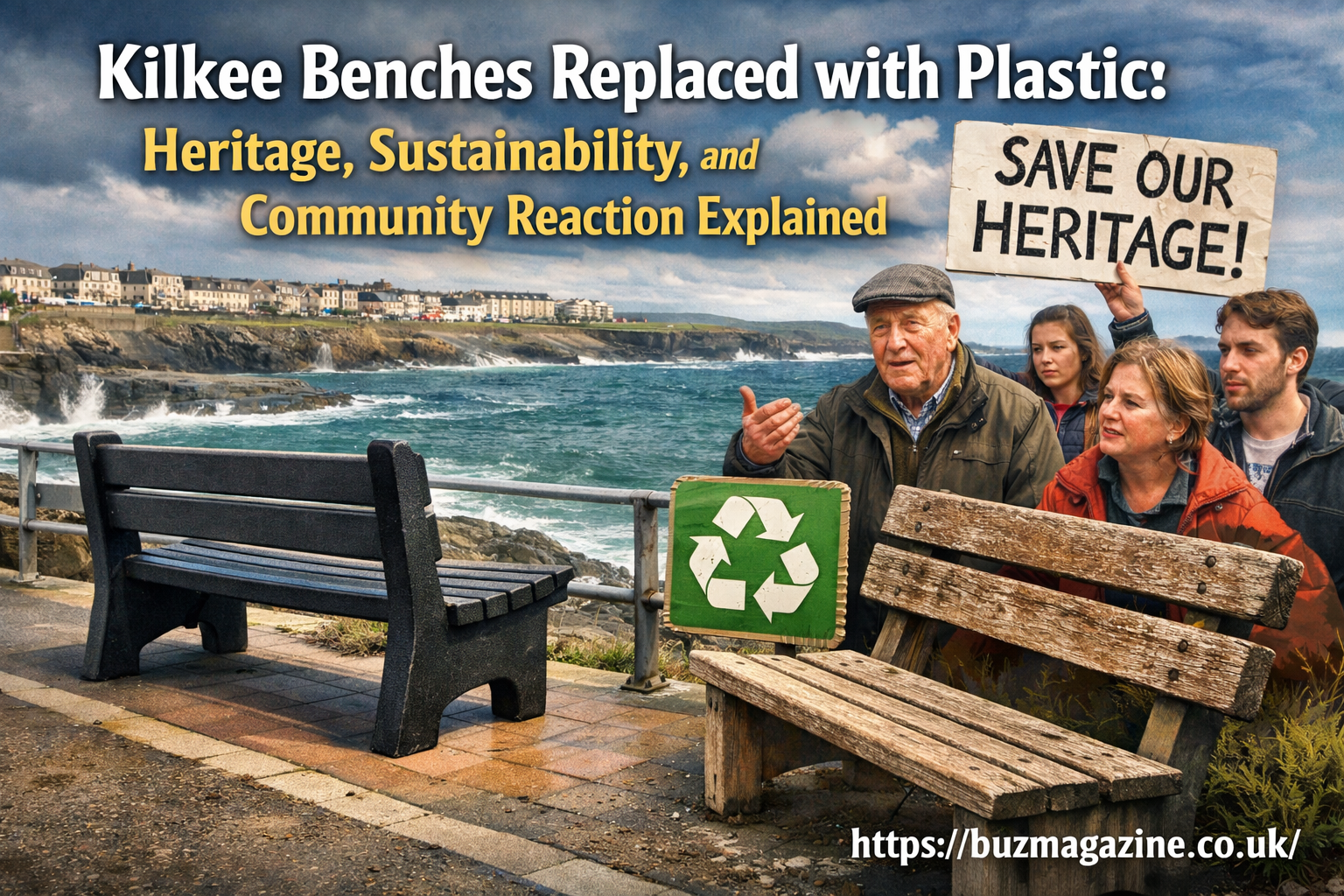
Introduction – The Bench That Sparked a National Conversation
In 2025, a seemingly simple decision to replace a handful of benches in the seaside town of Kilkee, County Clare, Ireland ignited a passionate debate about heritage, sustainability, and civic consultation. What began as routine public‑works maintenance became a touchstone for broader conversations about identity, design, and community power in public space. The beloved blue‑and‑white wooden benches that once dotted Kilkee’s promenade were removed and replaced with brown recycled‑plastic seating—a move that residents, social media contributors, and even regional news outlets noted was deeply divisive.
Approximately 20 original benches were replaced in early mid‑2025, including along the Esplanade, near the historic bandstand, and at George’s Head car park.
This article goes beyond the headlines to explain why the change happened, what it means for Kilkee’s culture and sustainability goals, and what lessons other towns can draw from this microcosm of heritage versus modern practicality.
The History of Kilkee’s Iconic Blue‑and‑White Benches
For decades, the blue‑and‑white benches were more than just public seating; they were symbols of Kilkee’s community identity. Painted in the colours associated with local Gaelic Athletic Association (GAA) teams, the benches stood as enduring landmarks on a promenade known for its dramatic Atlantic vistas.
These benches punctuated Kilkee’s seafront at scenic spots where locals and visitors alike paused to enjoy coastlines, sunsets, and conversation. Over the years, they became woven into the collective memory of families, generations, and long‑standing seaside traditions—so much so that their absence was immediately felt when they were removed.
Public furniture often acts as visual shorthand for place: a row of benches, painted a distinctive colour and placed in iconic settings, can become part of a town’s brand. In Kilkee, these seats were among the fixtures that told visitors, “This is Kilkee.”
Why the Kilkee Benches Were Replaced
Clare County Council, responsible for public amenities in Kilkee, offered several practical reasons for the change:
Structural Deterioration and Safety Concerns
Kilkee’s coastal climate—salt spray, frequent rain, strong winds—takes a heavy toll on timber exposed to the elements year after year. Over time, some benches exhibited rot and structural weakness, raising legitimate concerns about safety in public areas.
Local officials and observers noted that repairs became more frequent and costly, and in some cases wood splintering or weakening metal fixings presented potential hazards for those sitting or leaning on them.
Maintenance Costs and Lifespan
Wooden benches require ongoing maintenance—sanding, sealing, repainting, and eventually full plank replacement—especially in a seaside setting where climate accelerates wear. In contrast, recycled plastic variants significantly reduce these recurring costs while extending usable life.
Environmental Goals
Switching to recycled plastic ties into broader municipal goals of sustainability. Recycled plastics derived from high‑density polyethylene (HDPE) or similar composites offer a way to repurpose post‑consumer materials and support circular‑economy practices in public infrastructure.
Despite these practical motivations, Kilkee’s bench replacement rapidly became tied up with values beyond maintenance, as locals expressed concern about heritage loss—a theme explored below.
What Makes Recycled Plastic Benches Different?
The new benches are typically made from recycled or post‑consumer plastic—materials that, when sourced responsibly, reduce reliance on virgin resources and extend the useful life of plastics that might otherwise enter landfills.
Durability and Maintenance
Recycled plastic benches are designed to resist:
- Rot, cracking, and splintering, common in timber exposed to salt and humidity.
- Salt corrosion and UV damage, prevalent in coastal climates that shorten the life of untreated wood.
- Insect damage and fungal decay, issues that plague timber.
Maintenance is minimal—washing with mild soap and water is usually sufficient—eliminating the need for repainting or seasonal treatments.
Environmental and Circular‑Economy Claims
When benches are manufactured from diverted plastic waste (such as bottles and packaging), they help reduce demand for new plastic production, providing a second life to materials that might otherwise contribute to landfill waste.
Aesthetic and Cultural Differences
However, look and feel matter: recycled plastic, especially in neutral tones like brown, does not visually replicate traditional timber—let alone benches painted in unique community colours. This aesthetic gap became a key point of contention in Kilkee.
Community Reaction – Divided Between Nostalgia and Progress
The public response in Kilkee has been sharply divided:
Appreciation for Practical Benefits
Some residents and visitors welcomed the new benches for their comfort, durability, and longer lifespan. At least one visitor from outside County Clare expressed preference for the taller, more robust seating offered by the new design.
Supporters argue that in a busy tourist town, seating must be safe and accessible, and low maintenance frees up council resources for other needs.
Outrage and Nostalgia
On the other hand, many locals described the brown plastic benches as “awful” and out of place against Kilkee’s picturesque promenade.
Social media threads and local letters lamented the loss of what they considered a heritage element of Kilkee’s visual identity, with complaints that the change was abrupt and unconsulted.
Residents noted specific removals—around four at the Esplanade, one near the Strand Hotel, and several at George’s Head car park and bandstand—as symbolic losses to community memory.
Heritage vs Sustainability – The Debate in Kilkee
Kilkee’s bench story encapsulates a broader global tension:
Practicality and Safety
Proponents of sustainability emphasize durability, safety, and environmental responsiveness—priorities that are increasingly central to public infrastructure decisions.
Cultural Identity and Heritage
For heritage proponents, public seating is not neutral. Benches painted in community colours were seen as extensions of local identity and tradition—so their removal felt like an erosion of Kilkee’s character.
Insufficient Consultation
A recurring complaint was the perceived lack of adequate consultation before installation. Many residents reported surprise at the council’s decisions, fueling anger and a sense of being ignored.
This underscores a vital lesson: procedural legitimacy matters. No matter how justified a decision may be technically, it can face backlash if people feel excluded from the conversation.
Environmental and Economic Considerations
The bench replacement is as much about efficiency as it is about green goals.
Environmental Trade‑Offs
- Pros: Repurposing plastic waste into benches diverts materials from landfills and reduces demand for new resources.
- Cons: Plastic production—even recycled—carries embedded emissions, and degraded plastics can shed microplastics over time if not managed properly.
The true environmental impact depends on factors like local recycling infrastructure and lifecycle assessments.
Economic Analysis – 10‑ to 20‑Year Horizon
While wooden benches require repainting, repair, and replacement with relative frequency, recycled plastic benches have lower annual maintenance costs and a longer functional life. This can be persuasive in towns working with constrained budgets.
In a climate where wood may rot and splinter rapidly, plastics that resist decay can provide cost stability over decades.
Kilkee’s Coastal Challenges and Climate Adaptation
Kilkee’s Atlantic setting creates unique pressures on public infrastructure:
- Salt spray and high humidity accelerate timber decay.
- Strong winds and storm events exert physical stress on benches and fixings.
In response, councils often prioritise materials that can withstand long cycles between repairs—a major recommendation in climate adaptation planning.
Yet durability need not be visually insensitive: design solutions can combine sustainable materials with community aesthetics.
The Role of Public Consultation and Local Voices
A core grievance in the Kilkee debate was the perceived lack of meaningful consultation:
- Some locals felt decisions were made without formal forums, town hall meetings, or visual mockups prior to installation.
- Others noted that existing benches in good condition were replaced nonetheless, raising questions about criteria used.
Best practice in public infrastructure projects usually involves published rationales, iterative design reviews, and stakeholder input—steps that would likely have reduced backlash.
Kilkee’s experience highlights that process matters as much as technical outcomes.
Art, Identity, and the Aesthetics of Public Seating
Public seating is a form of functional art. Benches, bins, and lampposts collectively shape how a place feels to residents and visitors alike.
Design Options That Honor Identity
Some design alternatives could include:
- Recycled plastic slats in traditional blue and white mounted on corrosion‑resistant frames.
- Hybrid benches: reclaimed timber with recycled plastic substructures.
- Colour‑matched composites to maintain community palettes.
These options demonstrate that sustainability and aesthetics don’t have to be opposites—they can be complementary.
Alternatives That Could Have Been Considered
Kilkee’s situation wasn’t binary; there were middle paths:
Hybrid Construction
- Combine plastic framing with painted recycled or reclaimed timber slats to preserve visual heritage while ensuring durability.
Selective Refurbishment
- Replace only rotten planks and apply modern protective coatings to extend timber life.
Local Manufacture
- Commission benches from locally sourced sustainable timber designed for coastal use, blending economic support with cultural resonance.
Color‑Matched Composites
- Use eco‑friendly boards pre‑pigmented to the community’s blue‑and‑white scheme.
Phased Consultation and Pilot
- Trial a small number of alternatives and solicit community feedback before full rollout.
These approaches reduce abrupt change while aligning with environmental and safety goals.
Broader Lessons for Other Irish Towns
Kilkee’s bench debate teaches broader lessons likely relevant to other towns:
Process Matters
Early consultation and clear communication reduce resentment.
Design Matters
Visual continuity can be preserved without sacrificing modern performance.
Framing Matters
Explaining trade‑offs of safety, lifespan, and sustainability helps residents see the bigger picture.
Piloting Matters
Small, reversible pilot projects allow councils to test public acceptance before committing to wide implementation.
Key Facts and Figures About the Kilkee Bench Replacement Project
- Estimated benches replaced: ~20 original blue‑and‑white wooden benches.
- Typical locations affected: promenade Esplanade, in front of the old Strand Hotel, George’s Head car park, Kilkee Bandstand.
- Timing of public debate: Mid‑2025, with local media and social media discussions amplifying responses.
- Material choice: Brown recycled plastic benches chosen for durability, low maintenance, and sustainability claims.
Frequently Asked Questions (FAQs)
Q1: Why were Kilkee’s wooden benches replaced with plastic?
A1: The council cited structural deterioration and safety concerns caused by years of coastal exposure, plus motivation to choose low‑maintenance and more sustainable seating materials.
Q2: Were residents consulted before the replacements?
A2: Many locals say they were not adequately consulted, and that decision‑making felt abrupt, fueling much of the backlash.
Q3: Are recycled plastic benches environmentally friendly?
A3: They can reduce demand for virgin materials and divert waste from landfills, but true benefits depend on lifecycle, recyclability, and local waste infrastructure.
Q4: Could the original look have been preserved?
A4: Yes—through design options like color‑matched composites or hybrid timber/plastic constructions that respect heritage while improving longevity.
Q5: Did the bench replacement affect tourism?
A5: Early coverage noted mixed reactions; while some see sustainability efforts as attractive to eco‑conscious visitors, others worry that aesthetic backlash could diminish Kilkee’s seaside charm.
The Future of Kilkee’s Seafront Design
Kilkee’s bench debate may prove to be a pivot point for more thoughtful design in future projects. Opportunities on the horizon could include:
- Co‑design initiatives where residents collaborate with designers.
- Pilot programs testing culture‑aware bench styles.
- Interpretive signage explaining sustainability choices.
- Partnerships with local manufacturers to produce bespoke benches with heritage cues.
By combining technical needs with design empathy, Kilkee can model a path where sustainability amplifies, rather than erodes, local identity.
Conclusion – Preserving the Soul of Kilkee Through Sustainable Design
Kilkee’s bench story is about much more than timber versus plastic. It’s a narrative about how communities negotiate the intersection of memory, aesthetics, and modern imperatives—safety, economic constraints, and environmental stewardship. As the town moves forward, its experience reminds us that technical rationale alone will not quell debates over place and identity—process, communication, and design sensitivity are equally vital.
For towns looking to upgrade infrastructure with greener, more durable materials, the best social outcome often comes from treating heritage as a design requirement rather than an obstacle. For Kilkee, the debate is not finished. There remains an opportunity to reconcile sustainability with style—bringing back the colours in ways that prevent waste while keeping the town’s soul visible on its beloved promenade.