




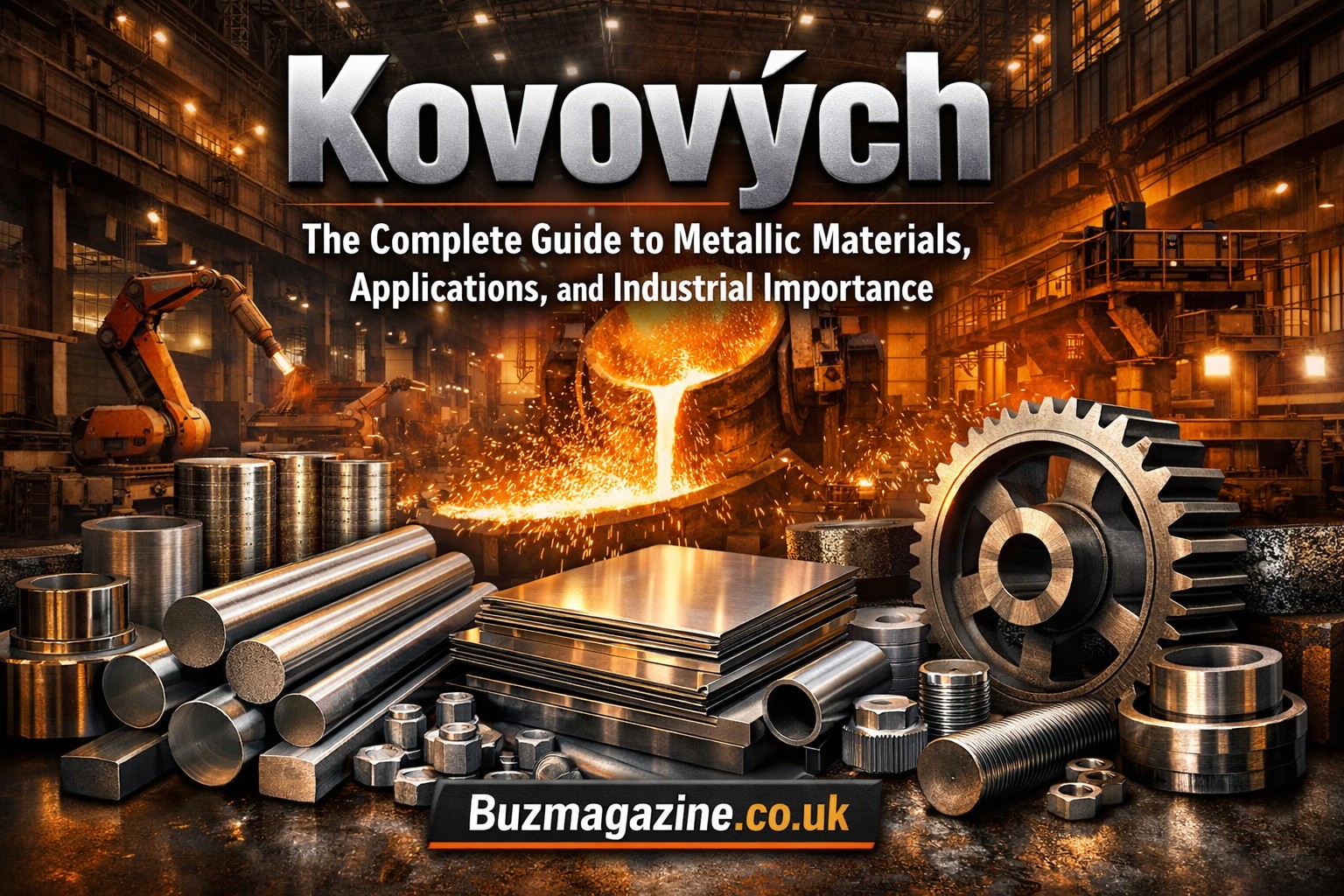
Metals are the backbone of modern civilization. From towering skyscrapers and durable bridges to cutting‑edge electronics and safe transportation systems, metallic materials shape the world we live in. But if you’ve ever encountered the term “kovových” — especially in technical or industrial contexts — you may have wondered what it truly means, where it comes from, and why it’s used so frequently in engineering documentation.
Kovových is more than just a word in Czech — it’s a term that encapsulates the world of metallic materials, their properties, applications, and their critical role in modern industry. This complete guide will walk you through every aspect of kovových: from its linguistic meaning to industrial applications, advantages, challenges, future trends, and real‑world examples.
Whether you’re a student, engineer, designer, writer, or simply curious, this article was created to be the most comprehensive online resource about kovových and metallic materials.
1. What Does Kovových Mean?
At its core, kovových is a Czech adjective form meaning “of metals” or “metallic materials.”
Understanding the meaning of kovových requires breaking it into parts:
- Kov – the Czech root word for metal
- Kovový – adjectives meaning metallic or made of metal
- Kovových – the genitive plural form, used when referring to multiple metal objects or materials
In English, kovových commonly translates to “metallic materials,” “metal components,” or “made of metal.” It typically appears in technical contexts where precise material definition is required.
Real‑World Usage Examples
In Czech technical literature, you might see phrases like:
- Kovových materiálů – metal materials
- Kovových konstrukcí – metal structures
- Kovových dílů – metal parts
These phrases show how kovových is used to describe groups of metal items, especially in engineering, manufacturing, and construction.
2. Origin and Language Background
The Czech language features a rich grammatical system where word forms change based on case, number, and gender. This is particularly important in technical writing, where precision matters.
In Czech, the genitive case often expresses possession, material, or quantity — which is why kovových is typically used when talking about materials made of metal.
Understanding this linguistic nuance helps prevent translation errors and ensures clarity in international technical documentation.
3. Key Characteristics of Kovových Materials
Metals are distinct from many other materials due to specific physical and chemical properties. These properties define why metals are chosen for certain applications and what makes kovových materials indispensable.
Strength and Durability
One of the most fundamental characteristics of kovových materials is their strength. Metals like steel and titanium can withstand heavy loads and resist deformation, making them ideal for structural and load‑bearing applications.
Durability means metallic materials maintain their integrity under varying environmental conditions — from extreme heat to repeated mechanical stress.
Conductivity
Metals are excellent conductors of electricity and heat. Copper, for example, is widely used in electrical wiring because it allows electricity to flow with minimal resistance. Similarly, aluminum’s high thermal conductivity makes it ideal in heat exchangers and cooling systems.
Corrosion Resistance
Many metallic materials can resist corrosion, either inherently (like stainless steel) or through protective coatings. This is crucial in environments exposed to moisture, chemicals, or high temperatures.
Malleability and Ductility
Metals can be shaped or stretched without breaking — a quality that allows precision fabrication through welding, forging, bending, and other processes.
4. Types of Kovových Materials
Not all metals are the same. Each has unique characteristics that make it suitable for certain applications.
Steel
Steel is arguably the most important kovových material in the world. It’s an alloy of iron and carbon — strong, versatile, and relatively inexpensive. Steel is the primary material for construction, infrastructure, automotive frames, and heavy machinery.
Steel production alone exceeded 1.8 billion tonnes globally in recent years, making it one of the most widely produced industrial materials on Earth.
Aluminum
Aluminum is lightweight, corrosion‑resistant, and easy to work with. It’s used extensively in transportation (especially aerospace and automotive), packaging, and consumer electronics.
Despite being lighter than steel, aluminum can be alloyed with other metals to improve strength and durability.
Copper
Copper’s standout property is its exceptional electrical conductivity — second only to silver among pure metals. This makes copper essential for cables, motors, generators, and electrical grids.
Copper is also used in plumbing, roofing, and industrial machinery.
Titanium
Titanium is known for its high strength‑to‑weight ratio and excellent corrosion resistance. It’s widely used in aerospace, medical implants, chemical processing equipment, and performance automotive parts.
Although more expensive than many other metals, titanium’s performance benefits justify its use in critical applications.
Alloys
Beyond pure metals, kovových materials include a wide range of alloys — combinations of metals designed to enhance specific properties:
- Stainless steel — corrosion resistance
- Brass and bronze — improved machinability and wear resistance
- Nickel alloys — high temperature performance
- Magnesium alloys — extremely lightweight
Each alloy is engineered to meet the demands of its application.
5. Industrial Applications of Kovových
Kovových materials are used across almost every major industry on Earth.
Mechanical Engineering
Machines, engines, turbines, and mechanical systems rely on metal parts like gears, shafts, and frames — components that must withstand mechanical stress, motion, and wear.
Metal Fabrication
Metalworking processes such as:
- Welding – joining metal pieces
- Casting – shaping molten metal
- Machining – cutting and shaping
are fundamental to producing precision components used in heavier industry and consumer products.
Industrial Production
Factories around the world depend on kovových components for automation, safety systems, tooling, conveyors, and structural support.
Modern manufacturing uses robotics and CNC machining to produce complex metal parts with high accuracy.
Construction and Infrastructure
Buildings, bridges, high‑rise towers, pipelines, and stadiums are built on kovových frameworks. Steel beams and metal reinforcements provide the strength required to support heavy loads and withstand environmental forces.
Metal roofing, rebar, and framing systems are staples of modern architecture.
6. Kovových in Transportation and Technology
Automotive Industry
Cars include dozens of kovových components:
- Frames and chassis
- Engine parts
- Brake systems
- Exhaust systems
High‑strength steels and aluminum alloys improve safety while reducing weight for better fuel efficiency.
Aerospace Engineering
Aircraft and spacecraft depend on lightweight yet strong kovových alloys. Aluminum, titanium, and advanced nickel alloys help structures withstand extreme pressures and temperatures.
Technology and Electronics
Smartphones, laptops, and communication equipment use kovových materials for:
- Casings
- Circuit connections
- Heat dissipation
- Internal frames
Metallic materials help protect delicate electronics and improve performance.
7. Advantages of Kovových Materials
Longevity and Reliability
Metallic materials are durable. Many metal structures last decades or centuries with proper maintenance — which is why bridges constructed in the early 20th century are still in use today.
Recyclability and Sustainability
Metals are some of the most recycled materials in the world. Steel, aluminum, and copper can be recycled repeatedly without significant loss of quality. This reduces energy use and conserves natural resources.
Recycling aluminum, for example, uses up to 95% less energy than producing primary aluminum from ore.
Cost‑Effectiveness
Even though initial fabrication may be expensive, metals’ long lifespan, strength, and recyclability make kovových materials cost‑effective over time.
8. Challenges and Limitations
Despite their advantages, kovových materials have challenges:
Corrosion
Exposure to moisture and chemicals can degrade metal surfaces unless protective coatings are applied.
Environmental Impact
Mining and smelting metals require significant energy and can produce greenhouse gas emissions. Sustainable practices are critical to reduce environmental footprints.
Production Costs
Some metals, like titanium or specialty alloys, are expensive to extract and process.
Solutions
Industries combat these challenges with:
- Protective coatings
- Green metallurgical processes
- Advanced alloys
- Improved recycling programs
9. Common Mistakes in Kovových Usage
Wrong Material Selection
Choosing the incorrect kovových material for an application — for example, using a low‑grade steel in corrosive environments — leads to early failure.
Poor Fabrication Techniques
Improper welding, machining, and assembly can compromise strength and durability.
Neglecting Protective Treatments
Failing to apply corrosion‑resistant finishes drastically reduces service life.
10. Kovových in Art, Design, and Architecture
Metals aren’t just functional — they’re aesthetic. Designers and architects use metals for beauty, durability, and expression.
Architectural Applications
Steel, aluminum, and copper façades create modern, sleek structures. Exposed metal beams and frameworks convey strength and design sophistication.
Interior Design
Metal furniture, lighting fixtures, and fixtures add elegance and durability to interior spaces.
Sculpture and Public Art
Metal art — from massive installations to fine sculptures — endures outdoors for decades, often becoming cultural landmarks.
11. Future Trends and Innovations
The future of kovových materials is dynamic, driven by new technologies.
3D Metal Printing
Additive manufacturing (metal 3D printing) enables complex shapes, reduced waste, and part consolidation — transforming traditional fabrication methods.
Smart Metals
Research is underway on metals that can adapt their properties in real‑time, self‑heal, or change shape in response to conditions.
Sustainable Practices
Green steelmaking, reduced carbon emissions, and circular material flows are priorities in modern metallurgy.
12. Kovových in Everyday Life
While industrial uses are dramatic, kovových materials are also everywhere in daily life:
- Kitchen appliances
- Cutlery
- Furniture frames
- Tools
- Building hardware (doorknobs, railings)
From the moment your alarm clock sounds until your lights turn off, kovových materials play a role.
Conclusion
Kovových is more than a term — it’s a concept that defines the world of metallic materials and their impact on engineering, industry, technology, construction, and everyday life.
From strength and conductivity to recyclability and innovation, kovových materials are essential to modern society. Whether in massive infrastructure or tiny electronic circuits, metals provide durability, reliability, and performance that no alternative materials can consistently match.
Understanding kovových — linguistically and technically — lets professionals communicate precisely, innovate intelligently, and build the future with confidence.
Frequently Asked Questions (FAQs)
1. What does kovových mean?
Kovových means “of metals” or “metallic materials.” It’s the Czech genitive plural form used to describe objects or materials made of metal.
2. Where is kovových used?
It’s commonly used in technical documentation, engineering manuals, construction plans, and industrial descriptions.
3. Why are kovových materials important?
Kovových materials are strong, durable, recyclable, and essential for infrastructure, technology, and transportation.
4. Which industries use kovových materials?
Industries like construction, automotive, aerospace, electronics, manufacturing, and design heavily rely on kovových materials.
5. Are kovových materials environmentally friendly?
While production can be energy‑intensive, metals are among the most recycled materials, which supports sustainability and resource conservation.
ALSO READ: Musté: The Complete Guide to Tradition, Fermentation, and Modern Wellness