


In an era defined by environmental urgency and design innovation, Ottans has emerged as a groundbreaking concept representing the intersection of sustainability, aesthetics, and material innovation. Born from the drive to rethink how materials are made and used, Ottans exemplifies how circular design philosophy can replace traditional, resource‑intensive surfaces with eco‑conscious alternatives. At its core, Ottans reimagines waste — from eggshells to pistachio shells, expired grains, grasses, and fruit peels — as a resource rather than refuse, empowering architects, designers, and consumers to build with purpose.
This article explores every facet of Ottans — from its origins and material science to its applications, benefits, and future potential — while situating it within the broader context of sustainable materials and circular economy design.
Introduction to Ottans
What Ottans Means in Sustainable Design
Ottans refers to a family of bio‑composite materials developed by Ottan Studio, an impact‑oriented design and technology company focused on transforming food and agricultural waste into durable, visually compelling surfaces. Rather than relying on traditional materials like plastic laminates, synthetic composites, or stone — all of which consume high amounts of natural resources — Ottans turns low‑value organic inputs into high‑performance, eco‑friendly panels suitable for interiors, furniture, and architectural applications.
Why Ottans is Becoming Essential Today
The built environment accounts for a significant portion of global material consumption and associated carbon emissions. With global awareness around climate change and resource depletion rising, demand for sustainable alternatives in interior design and construction has surged. Sustainable materials markets — spanning biodegradable composites, recycled surfaces, and circular bio‑based solutions — are growing rapidly, with projections suggesting the global sustainable materials sector may reach USD 888 billion by 2033.
In this context, Ottans stands out not merely as a design trend but a viable response to environmental imperatives — one that aligns ecology with industry needs.
The Origin and Philosophy of Ottans
Where the Term Ottans Comes From
The term Ottans is directly tied to Ottan Studio, a sustainability‑driven startup founded in 2017 with operations spanning London and Istanbul. The company developed progressive technologies to upcycle organic waste — such as eggshells, nutshells, expired legumes, and plant clippings — into new material formulations suitable for architectural and interior use. Over time, the name Ottans has come to represent not just a material line but a holistic philosophy of conscious design and circular production.
The Founding Vision of Ottan Studio
Ottan Studio was started by visionary founders including Ayşe Yılmaz, who saw untapped potential in biological waste while observing everyday fallen leaves and organic debris. What began as an idea to repurpose neglected natural resources evolved into a mission to shift design practice toward a regenerative, waste‑free model. The aim: protect natural ecosystems by reducing extraction and replace them with sustainable, upcycled materials that enrich built environments rather than degrade them.
The Sustainability Imperative in Modern Design
Sustainability in design is no longer optional — it’s a requirement. Current industrial production heavily depletes raw resources like timber, stone, and fossil‑based plastics. Approximately 1.3 billion tonnes of food waste are generated yearly, while forests continue to shrink under logging pressures. Ottans challenges this paradigm by sourcing inputs from organic waste streams, reducing pressure on forests, and enabling a material lifecycle that aligns with environmental responsibility.
Circular Economy Principles Behind Ottans
Ottans embodies the core principles of the circular economy, shifting away from the traditional take‑make‑dispose model toward one that values reuse, regeneration, and closed‑loop manufacturing. In this model, waste becomes raw material, and materials are designed to retain value throughout their lifecycle. This approach significantly reduces landfill contributions, greenhouse gas emissions, and extraction of virgin resources — key goals in global sustainability frameworks.
Understanding Ottans Bio‑Composite Materials
What Ottans Materials Are and Why They Matter
Ottans materials are bio‑composites — composite materials that blend organic waste particles with eco‑friendly binders, forming rigid and versatile surfaces. Traditional biocomposites combine a matrix (often a resin) with natural fibers like hemp or flax to reduce reliance on synthetic polymers. Similarly, Ottans harnesses organic residues (e.g., eggshells, nutshells, expired grains, plant fibers) as structural elements, giving each material both distinct aesthetic properties and functional performance.
This strategy decreases reliance on non‑renewable resources, enhances life cycle sustainability, and offers designers unique textures and visual narratives derived directly from nature’s variability.
How Ottans Materials Are Made: From Waste to Design
The production process involves several key stages:
- Collection and Preparation: Organic waste — from shells, grass, leaves, and fruit remnants — is sourced from food processors, agricultural suppliers, and local collections.
- Cleaning and Drying: Waste inputs are cleaned of impurities and dried to stabilize them for processing.
- Grinding: The dried waste is ground into fine particles tailored to the desired material characteristics.
- Binder Integration: Particles are blended with bio‑based binders or green resins that give cohesion and performance.
- Molding and Curing: The mixture is shaped under controlled pressure and heat to form solid panels.
- Finishing: Panels are sanded and finished to meet aesthetic or functional specifications, such as smoothness, translucency, or acoustic properties.
This process leverages nature’s inherent variability, meaning each batch possesses subtle uniqueness while retaining performance standards suitable for modern design use.
Types of Ottans Materials
Ottans offers diverse material lines, each optimized for different functional and aesthetic purposes.
Core Line
The foundational set of commercialized materials includes variants like:
- Eggy: Produced from eggshells, showcasing warm natural tones.
- Nutty: Based on hazelnut shells, with rich earthy textures.
- Nuts: A hybrid of hazelnut and pistachio shells for robust surfaces.
- Moon: A refined blend of eggshells and pistachio shells with neutral aesthetics.
These materials are engineered for versatility, durability, and consistent reproduction at scale.
Core Line Seasonal
Seasonal lines embrace raw material variability — using grass, leaves, expired pulses, and other organic streams to create limited‑edition variations with distinct visual depth and upcycled content ranging from ~50% to 72%.
Core Line Translucent
Panels designed to transmit light, crafted from ingredients like rice and lentils, combining design flair with sustainability — ideal for partitions, light fixtures, and creative architectural features.
Acoustic Line
Acoustic panels engineered to absorb sound while maintaining Ottans’ natural texture. These often incorporate malt husk, grass fibers, and shell fragments for both performance and visual warmth.
Stone Line
Panelling that mimics the look and weight of stone while using up to 85% upcycled content. This line offers rugged none‑extractive alternatives to traditional stone surfaces.
Key Aesthetic and Technical Qualities
Ottans materials celebrate the organic irregularity that synthetic surfaces often avoid, offering designers materials that feel authentic, warm, and connected to nature. Technically, these materials deliver mechanical strength, chemical resistance, and customizable surface finishes. Some are engineered for acoustic absorption or translucency, expanding their utility beyond mere decorative surfaces.
Applications of Ottans in Design
Interior Architecture: Walls, Ceilings, and Panels
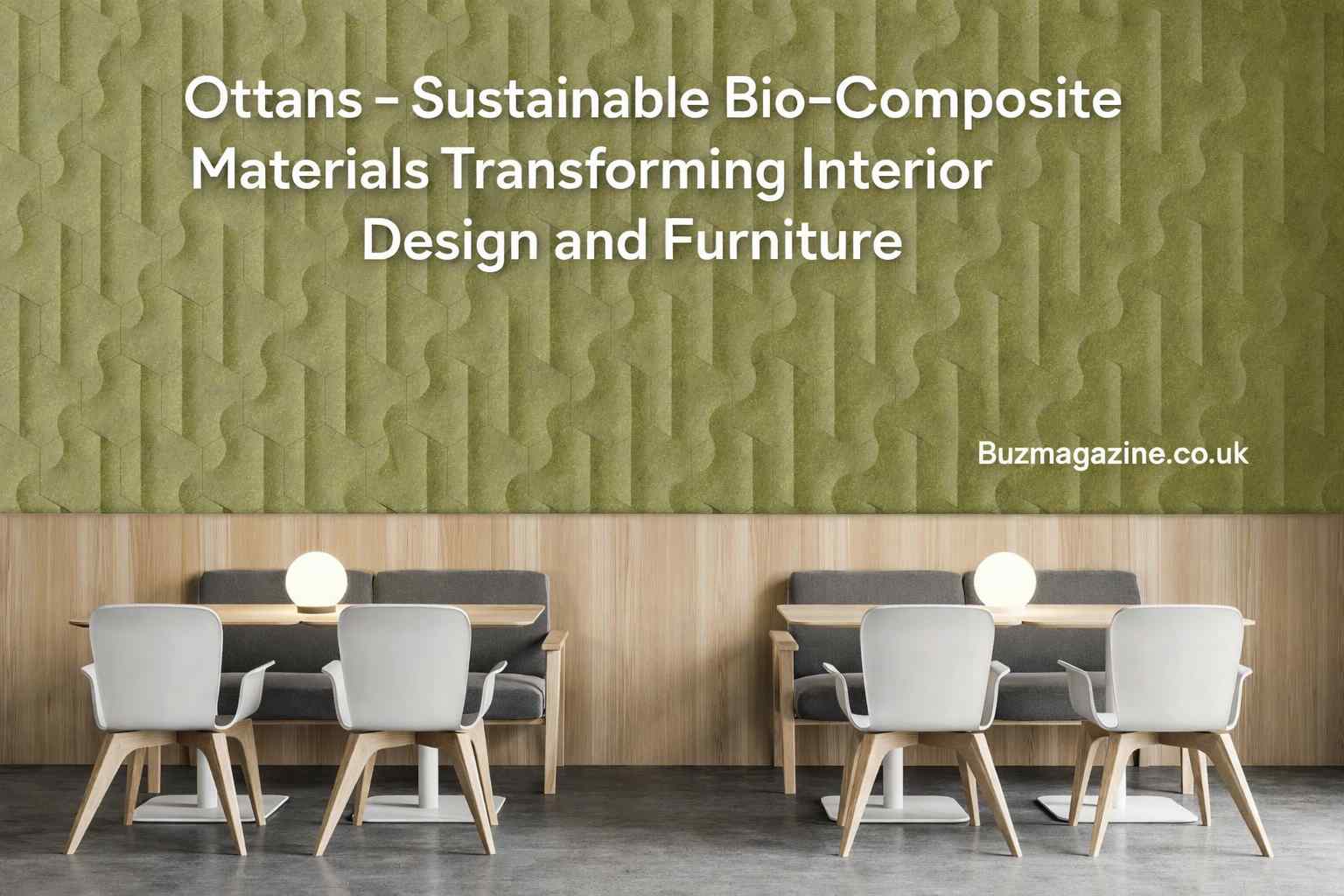
Ottans materials are widely utilized in interior spaces — from wall cladding to ceilings — where their natural textures enhance biophilic design strategies that connect occupants with nature. Their acoustic and aesthetic qualities make them especially compelling in hospitality, corporate, and residential interiors where comfort and environmental narrative are priorities.
Sustainable Furniture Design: Tables, Stools, Cabinets
Furniture crafted from Ottans surfaces represents a fusion of durability and storytelling. Tables, seating elements, and storage pieces made from these bio‑composites demonstrate that waste‑derived materials can meet everyday functional needs without sacrificing aesthetic appeal.
Commercial Spaces: Offices, Hotels, Retail Interiors
Commercial adoption of Ottans is growing due to its ability to communicate brand values tied to innovation and sustainability. These materials often contribute to green building certifications like LEED and BREEAM, which prioritize responsible sourcing.
Product Design: Lighting, Homeware, Accessories
Beyond large surfaces, Ottans materials inspire product designers to create smaller items like lighting fixtures, ornamental elements, and accessories, all echoing a sustainable design ethos.
Ottans vs Traditional Materials
Compared with conventional laminates, MDF, and fossil‑derived composites, Ottans offers environmental advantages by significantly reducing reliance on virgin resources and harmful adhesives. Traditional materials often involve energy‑intensive processing and generate volatile organic compound (VOC) emissions — a factor driving 65% of consumers to prioritize biodegradable interior products.
In contrast, Ottans surfaces deliver a lower environmental footprint, celebrate natural patterns rather than homogenized visuals, and support responsible life cycle management.
The Role of Ottans in Circular Economy and Sustainability
Ottans exemplifies circular economy design by turning waste into high‑value materials, lowering landfill contributions, conserving ecosystems, and aligning with global sustainability frameworks like the United Nations’ sustainable development goals. By reducing the need for raw material extraction and decreasing greenhouse gas emissions associated with traditional manufacture, Ottans helps industries decarbonize while maintaining design excellence.
Why Designers and Architects Choose Ottans
Design professionals are drawn to Ottans for multiple reasons:
- Creative Freedom: Customization in texture, color, and physical properties expands design possibilities.
- Compliance with Certifications: Using Ottans can contribute to sustainability credits in green building systems.
- Authentic Material Narrative: Clients increasingly value transparency in material origins and environmental impact.
These factors combine to make Ottans not just a material choice but a design statement rooted in ethics and innovation.
Challenges and Limitations
Despite its advantages, Ottans faces challenges common in sustainable material innovation, including scaling production to meet global demand, managing costs compared with mass‑produced synthetics, and ensuring steady supply of high‑quality organic waste. Addressing these challenges will be critical for Ottans’ broader market adoption.
Future Potential of Ottans Materials
Technological advancements — including enhanced binder systems, improved water resistance, and integration into modular construction — could broaden Ottans’ applicability into large‑scale architectural systems, transportation interiors, and consumer products. As the materials market rapidly shifts toward sustainability, Ottans could become a standard bearer for bio‑composite innovation.
Case Studies and Testimonials
Designers who integrate Ottans often highlight how the material’s story — from food waste to design asset — enriches user experience. Projects in hospitality, retail, and residential environments exemplify how sustainability can enhance brand messaging while delivering high‑end aesthetics.
Conclusion
Ottans represents a meaningful transformation in material design — one that aligns sustainability, creativity, and functionality. By converting organic waste into refined, high‑performance surfaces, Ottans challenges extractive industrial models and offers a compelling vision for future design practices rooted in circularity and responsibility.
As global sustainability goals intensify and markets expand, Ottans is poised not just as a design trend but as a lasting movement toward conscious, regenerative materials for interiors and furniture.
Frequently Asked Questions (FAQs)
1. What are Ottans in sustainable design?
Ottans are bio‑composite materials made from food and agricultural waste, used as sustainable alternatives to wood, stone, and synthetic surfaces in interior design and furniture.
2. How are Ottans materials made?
Organic waste is collected, cleaned, dried, ground, mixed with eco‑binders, molded, and finished into durable panels.
3. Why are Ottans better than traditional materials?
They reduce landfill waste, lower environmental impact, and offer unique natural aesthetics.
4. Where can Ottans materials be used?
They can be applied in walls, ceilings, furniture, acoustic panels, and product design.
5. Are Ottans materials durable and safe?
Yes — Ottans panels are engineered for stability, mechanical strength, and visual quality.
6. Can Ottans be customized?
Yes — texture, color, translucency, and performance properties can be tailored to design needs.
7. How does Ottans support the circular economy?
By turning waste into high‑value materials and reducing reliance on virgin resource extraction, Ottans embodies circularity principles.