




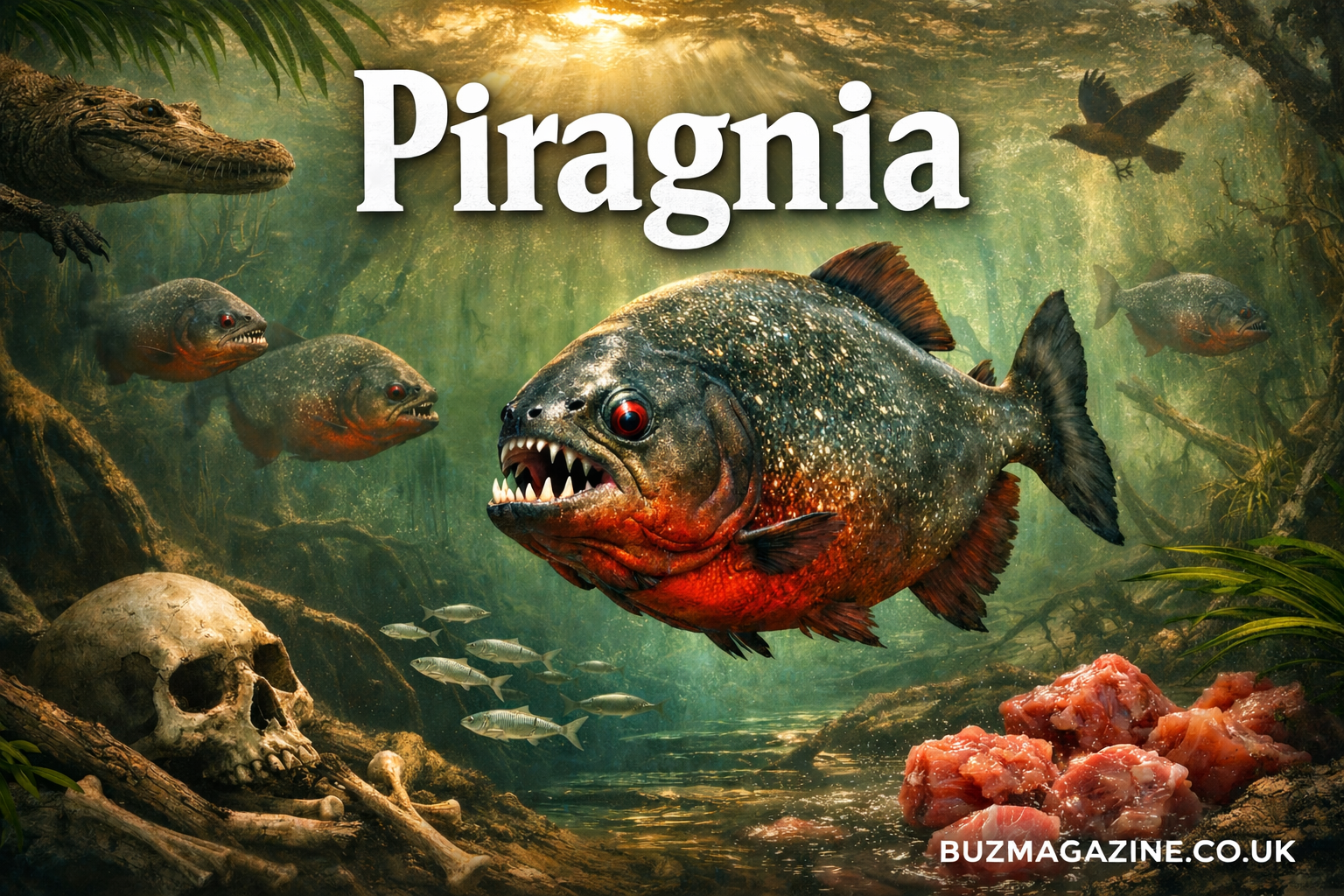
Introduction to Piragnia
Have you ever searched for “piragnia fish” and wondered what it really means? If so, you’re not alone. The term piragnia appears all over the internet — in search results, blogs, and forums — but it’s rarely clear what it refers to. In most cases, piragnia isn’t a scientifically recognized name at all. Instead, it’s a spelling variation or misunderstanding of the term piranha, the famous freshwater fish of South America.
In this article, we’ll explore the meaning of piragnia, its connection to piranhas, and everything you need to know about these fascinating fish — from habitat and diet to behavior, myths, ecosystem roles, and conservation challenges.
What Is Piragnia?
Meaning and Origin of the Word Piragnia
The term piragnia isn’t a formal scientific name. Instead, it’s an informal or incorrect spelling of piranha that has spread online due to phonetic confusion, language differences, and typing mistakes. When people hear “piranha” spoken aloud, they may assume it’s spelled with a “g” — thus giving rise to the word piragnia.
Is Piragnia a Real Fish Species?
No. In biological and ichthyological contexts, no fish species is scientifically classified as piragnia. The correct term for the group of fish people usually mean is piranha, which includes dozens of species in the Serrasalmidae family.
Why the Word Piragnia Appears Frequently Online
Search engines index words based on what people type most often. When a lot of users repeatedly enter “piragnia,” that term becomes recognized as a search query — even if it’s technically incorrect. Spelling variations, regional accents, and autocorrect systems also contribute to the spread of the term.
Piragnia vs Piranha: Are They the Same Fish?
Key Differences Between Piragnia and Piranha
- Piragnia is a misspelling or informal term.
- Piranha refers to a real group of fish in the Serrasalmidae family.
All scientific research and biological classification use piranha, not piragnia.
Similarities in Appearance and Behavior
When people refer to piragnia, they are almost always describing piranhas — fish known for sharp teeth, strong jaws, and a reputation as river predators in South America.
Why Many People Confuse These Two Fish
Because piranhas are popular in movies and stories, many people hear the name only once or twice, leading to mistakes in spelling and pronunciation. The confusion is compounded when incorrect terms are repeated online.
Scientific Classification of Piragnia Fish
Although piragnia isn’t scientific, its closest real counterpart — the piranha — has a precise biological classification:
- Kingdom: Animalia
- Phylum: Chordata
- Class: Actinopterygii
- Order: Characiformes
- Family: Serrasalmidae
- Common Name: Piranha
Within the Serrasalmidae family, various genera (like Pygocentrus, Serrasalmus, Pristobrycon, and Pygopristis) include species often called piranhas. Each species can vary slightly in behavior and appearance.
Physical Characteristics of Piragnia
Since piragnia is essentially a piranha reference, let’s look at the actual physical traits of piranha fish:
Body Shape and Size
Piranhas usually have a laterally compressed (flattened) body that allows agile swimming. Most species are medium‑sized, with average lengths of 5–14 inches (12–35 cm), though some grow larger.
Color Patterns and Identification
Many piranhas are silvery with reddish patches or darker patterns. The well‑known red‑bellied piranha (Pygocentrus nattereri) has a silvery body with a distinctive orange‑red underside.
Sharp Teeth and Jaw Strength
One of the most iconic features is the sharp, triangular teeth. Piranha teeth interlock like scissors and are constantly replaced throughout life, enabling them to bite effectively. Strong jaw muscles also give them a notable bite force relative to their size.
Natural Habitat of Piragnia Fish
Amazon River Basin
Piranhas are most diverse in the Amazon River Basin, home to around 20 different species. They thrive in the warm, nutrient‑rich waters of rivers, floodplains, and tributaries throughout the basin.
Orinoco and Paraguay–Paraná Rivers
Beyond the Amazon, piranhas are found in the Orinoco and Paraguay–Paraná systems, as well as the São Francisco River in Brazil and surrounding regions.
Flooded Forest Ecosystems and Tributaries
Seasonal flooding in the Amazon creates temporary habitats like oxbow lakes and forest‑floor waters that provide abundant food and shelter for piranhas during rainy seasons.
Diet and Feeding Habits of Piragnia
Carnivorous and Omnivorous Feeding Behavior
Piranhas are omnivorous and opportunistic feeders. While some species prefer meat, others also consume plant matter, seeds, fruit, and aquatic insects. Their diet often depends on seasonal food availability.
Hunting Techniques
Contrary to dramatic portrayals, piranhas rarely undertake elaborate hunts. Instead, they often nibble fins off other fish or scavenge dead animals, using their keen sense of smell to detect food in murky waters.
Scavenging Behavior in Rivers
Most species scavenge more than they hunt. Piranhas are attracted by the smell of blood, but active group feeding on large prey is uncommon.
Seasonal Diet Changes
During the rainy season, piranhas may disperse and feed on a wider range of food sources, including fruit that falls into flooded waters.
Behavior and Social Structure
Schooling Behavior
Piranhas often live in groups, called schools. These schools can range from a few fish to more than a hundred in some species. Schooling provides protection from predators and improves feeding efficiency.
Territorial Behavior
In low water periods, territorial behavior may increase as fish compete for limited resources. Larger species may defend preferred areas near food sources.
Predator Avoidance Strategies
Group living also helps defend against predators like river dolphins, caimans, and larger fish that may prey on juvenile piranhas.
Are Piragnia Fish Dangerous to Humans?
Reality of Fish Attacks
Despite their reputation, attacks on humans are rare. Most piranha bites occur when fish feel threatened or are startled, not as part of an aggressive hunt for people.
Situations When Bites Can Occur
Bites may occur if a person enters shallow water abruptly, especially during dry seasons when food is scarce and water levels drop. Even then, injuries tend to be minor.
Separating Myth from Reality
Movies and sensational stories exaggerate piranha behavior. Real piranhas prefer small prey and often avoid large animals, including humans, whenever possible.
Common Myths and Misconceptions About Piragnia
Myth: Piragnia Attack Humans Instantly
No scientific evidence supports widespread attacks on humans. Most interactions are defensive rather than predatory.
Myth: They Strip Animals to Bones in Minutes
This dramatic portrayal comes mainly from films. In nature, coordinated group feeding that rapidly consumes large prey is extremely rare.
How Movies and Media Created Fear
Hollywood often depicts piranhas as monstrous predators, contributing to misunderstandings about real fish behavior.
Ecological Role of Piragnia in the Amazon Ecosystem
Role as Predators
Piranhas help regulate smaller fish populations, removing weak or injured individuals and contributing to natural selection.
Role as Scavengers
By scavenging dead animals, piranhas help recycle nutrients in river systems, supporting broader food webs and ecosystem health.
Importance in Maintaining River Biodiversity
Their presence supports balance among species and contributes to the intricate ecological relationships in freshwater systems.
Conservation Status and Environmental Threats
Deforestation in the Amazon
Habitat loss from logging and agriculture threatens river ecosystems, reducing available habitat for fish like piranhas.
River Pollution and Habitat Loss
Pollutants from mining, agriculture, and urban runoff degrade water quality and disrupt breeding and feeding patterns.
Overfishing and Climate Change
While not as extensively studied as some other Amazon species, piranha populations may be impacted by unsustainable fishing and environmental change.
Scientific Research and Interesting Facts About Piragnia
Although direct research on piragnia as a term is minimal, extensive scientific study exists on piranhas — including:
- Taxonomic debates about how many species truly belong to the piranha group. Estimates range from fewer than 30 to more than 60 species worldwide.
- Data on jaw and bite mechanics, showing piranha teeth and muscles evolved for efficient feeding.
- Biological diversity within the Serrasalmidae family, from aggressive hunters to species that nibble scales off other fish.
Cultural Significance and Local Beliefs
Indigenous communities along the Amazon River have long relationships with fish like piranhas, often weaving them into folklore and practical fishing traditions. These stories may describe the fish as symbols of strength, caution, or survival.
Why the Term “Piragnia” Continues to Trend on the Internet
Despite its lack of scientific validity, piragnia remains common online due to:
- frequent misspellings
- search engine indexing habits
- social media repetition
- autocorrect and phonetic confusion
Understanding this helps readers find accurate information and avoid misinformation.
Conclusion
Piragnia may sound mysterious, but in reality, it’s simply a variation — often a misspelling — of the word piranha. Piranhas are real fish with a fascinating ecology, adapted to life in South America’s freshwater rivers. They play important roles in their ecosystems and are less fearsome than popular culture would have you believe.
Frequently Asked Questions (FAQs)
1. What is piragnia fish?
Piragnia is usually a misspelling or informal term for piranha fish, which are medium‑sized freshwater fish found in South America.
2. Is piragnia the same as piranha?
Yes. Most people use “piragnia” when they really mean piranha. Scientists only use piranha.
3. Where are piragnia fish found?
They are native to the Amazon River Basin, Orinoco River, Paraguay‑Paraná systems, and other South American rivers.
4. Are piragnia fish dangerous to humans?
Attacks are rare and usually defensive rather than predatory.
5. What do piragnia fish eat?
Piranhas eat insects, smaller fish, crustaceans, seeds, fruit, and plant material — they are opportunistic feeders.
ALSO READ: Glasgow Water Main Break Shettleston Road: Full Incident Report, Causes, and Recovery Efforts