




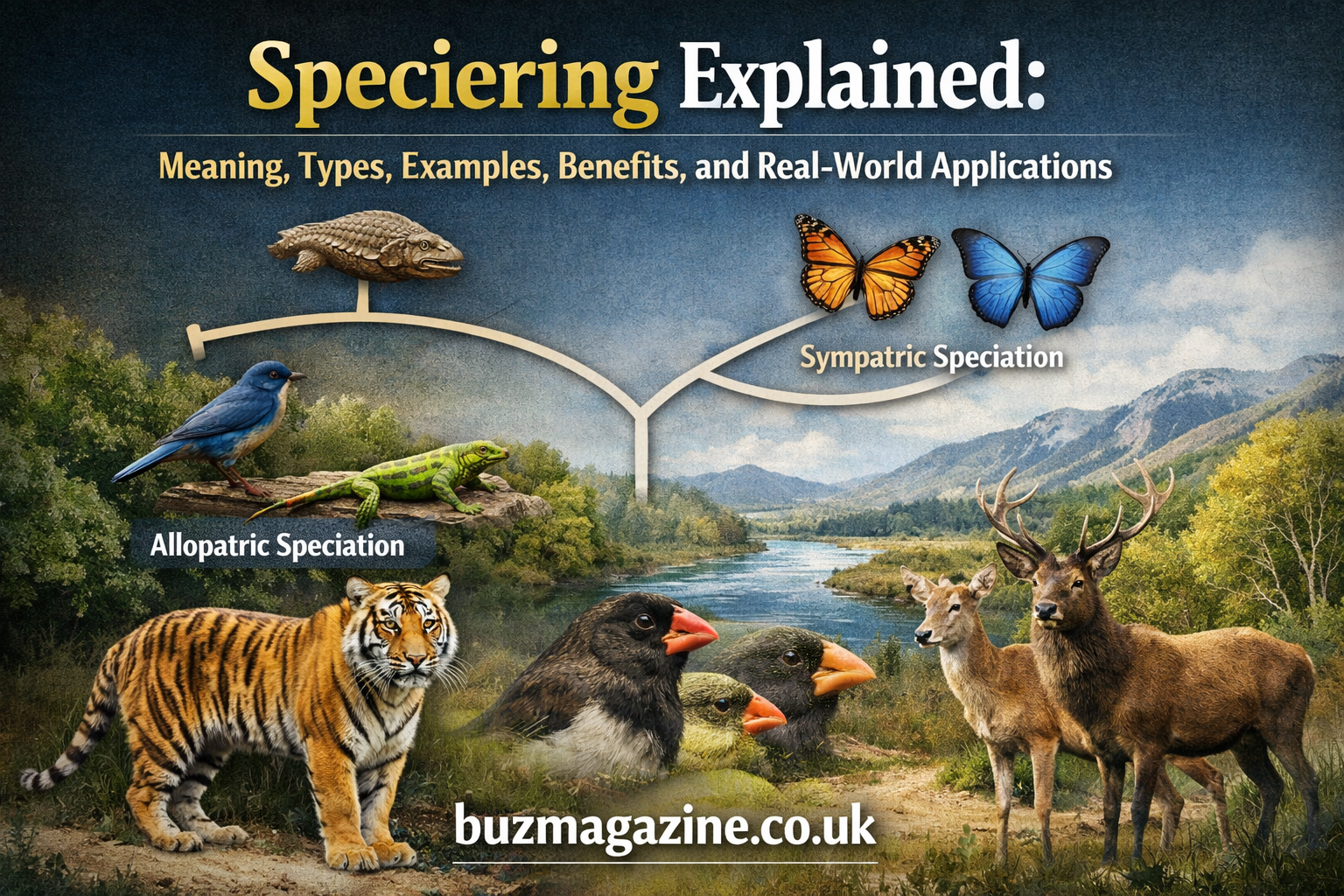
In a world where both marketing and biology continually evolve, a seemingly new concept—speciering—has begun gaining attention. But what exactly does this term mean? Is it a scientific phenomenon, a marketing strategy, or something entirely different? In reality, speciering represents an intersection of ideas about specialization: how distinct identities emerge, whether among consumers in a marketplace or species in nature.
This article explores speciering from multiple angles, offering a comprehensive review of its definitions, applications, and real-world examples. By the end, you’ll have a solid understanding of how speciering works, why it matters in both business and biology, and how to apply it effectively in your own efforts.
Introduction to Speciering
Speciering may sound like a made-up marketing buzzword or a term pulled from a biology textbook. The truth is that it blends principles from multiple disciplines. At its core, speciering refers to a process of defining, identifying, and catering to distinct groups—whether groups of organisms in nature or groups of consumers in a market.
The rise of digital data, advanced analytics, and ecological research tools has fostered new ways of understanding specialization, classification, and differentiation. This has made speciering relevant for both marketers seeking to tailor products to niche audiences and scientists working to understand biodiversity.
Understanding speciering provides clarity for organizations and researchers who want to go beyond general approaches—whether they are segmenting markets or cataloguing species. The concept encourages us to focus on the unique characteristics that make each segment or species distinct, and to use this understanding strategically.
What Is Speciering?
Speciering Definition (Simple Explanation)
At its simplest, speciering is the process of recognizing and grouping units—markets or organisms—based on distinct characteristics. In marketing, this refers to identifying consumer niches and tailoring solutions to their needs. In biology, it relates to identifying distinct species through evolutionary, genetic, or ecological differences.
In both cases, the goal is to move beyond broad categorization and surface nuance and differentiation.
Origin and Concept of Speciering
Although “speciering” itself is not yet a widely recognized term in academic literature, it stems from concepts with deep roots:
- In biology, speciation refers to the evolutionary process by which new species arise. Scientists track changes in genetics, behavior, and anatomy to classify new organisms.
- In marketing, segmentation and targeting have long helped brands find their best audiences. Speciering builds on this by stressing the development of unique value propositions for these audiences rather than broad segments.
By combining these strands, speciering becomes a framework for specialization—pushing both marketers and scientists toward precision and relevance.
How Speciering Works in Different Fields
Although the goals differ, the mechanisms behind speciering involve observation, analysis, and classification. In marketing, businesses mine data to discover hidden customer patterns. In biology, researchers collect samples and compare traits across populations to find distinct species.
Despite the different tools, the underlying process involves:
- Collecting detailed data
- Identifying meaningful differences
- Defining distinct groups
- Applying insights for strategy or study
Types of Speciering
Speciering in Marketing and Business
In the context of business, speciering involves:
- Identifying niche audiences with unique preferences or behaviors
- Developing specialized products, services, or messaging tailored to those audiences
- Optimizing interaction based on what makes that audience distinct
Unlike broad segmentation, which might divide customers by age or income, speciering strives for behavioral, psychological, or micro-based distinctions.
Example: A fitness brand may specier audiences not simply by age but by preferred workout style—e.g., high-intensity, meditation-aligned yoga fans, or eco-conscious trail runners. Each of these niches experiences the product in unique ways.
This level of specificity often yields higher engagement and loyalty because customers feel seen and understood individually—not just as part of a broad category.
Speciering in Biology and Taxonomy
In biology, speciering relates to the process of recognizing and categorizing distinct species within the natural world. This typically involves:
- Morphological differences — observable physical traits
- Genetic variation — differences in DNA sequences
- Ecological factors — adaptation to specific habitats
- Behavioral distinctions — unique behaviors or mating rituals
Modern methods like genome sequencing and machine learning analysis have accelerated the discovery of new species, revealing biodiversity that was previously hidden.
For example, genetic analysis has uncovered cryptic species—groups that look similar but are genetically distinct—especially in insects, fish, and microbes.
Other Emerging Forms of Speciering
As data capabilities grow, speciering is expanding into other fields:
- Data science & AI: Machine learning models can automatically identify nuanced clusters in data that humans might miss.
- Education: Personalized learning paths designed around individual strengths and preferences.
- Healthcare: Precision medicine that caters to patient genetics and lifestyle.
Across all these areas, the core idea remains consistent: recognize fine-grained distinctions and build strategies around them.
Speciering vs Targeting: Key Differences Explained
What Is Targeting?
Targeting is a well-established marketing approach that focuses on reaching specific segments of consumers with tailored messages. It relies on tools like demographic data, interest tracking, and behavioral analytics to deliver relevant content or offers.
For example, an online clothing retailer might target men ages 18–34 with ads for casual wear based on browsing behavior and purchase history.
Speciering vs Targeting (Side-by-Side)
| Feature | Speciering | Targeting |
| Core Focus | Deep specialization | Reaching optimal audience |
| Emphasis | Unique needs and tailored offers | Segmented delivery of messaging |
| Outcome | Specialized products & relationships | Efficient ad placement |
| Scope | Narrow, high-precision groups | Wide or specific audience sets |
| Time Investment | Often longer due to development | Shorter (messaging focus) |
Speciering often requires more nuanced insight and product refinement, while targeting emphasizes relevance in communication.
When to Use Speciering Instead of Targeting
Use speciering when:
- Your audience has distinct preferences that general segmentation overlooks
- Your product or service can be customized
- You want deep customer loyalty rather than broad reach
- You are competing in a crowded market where differentiation matters
Can Speciering and Targeting Work Together?
Absolutely. Many effective strategies begin with speciering to define a niche solution and then use targeting to communicate that solution efficiently.
For example, an eco-friendly laundry brand might develop niche formulations (speciering) and then use targeted ads to reach sustainability-focused consumers.
Why Speciering Matters in Today’s World
Importance of Speciering in Marketing Strategy
In a world saturated with choices, consumers increasingly expect personalization. Research suggests that:
- Over 70% of consumers say personalized experiences influence their purchasing decisions
- Personalized offers can increase conversion rates by up to 10–15%
Speciering pushes brands beyond basic personalization to authentic customization, where audiences feel that a product was made for them.
This leads to:
- Higher customer loyalty
- Increased retention
- Stronger brand advocacy
Importance of Speciering in Biodiversity and Conservation
In biology, understanding distinct species matters for conservation. According to the UN, approximately 1 million species are at risk of extinction due to human activity. Without precise classification, some species may disappear before they are even recognized.
Speciering enables:
- Better mapping of biodiversity
- Targeted habitat preservation
- Enhanced ecological understanding
This approach helps scientists set conservation priorities and allocate funding more effectively.
Benefits of Speciering
Advantages of Speciering for Businesses
- Deeper Customer Insights: Detailed understanding of unique needs
- Higher ROI: Better results from precision strategies
- Competitive Advantage: Capacities to serve audiences others overlook
- Stronger Brand Loyalty
Advantages of Speciering for Scientific Research
- Discovery of New Species
- Improved Conservation Planning
- Clearer Evolutionary Understanding
Studies using genomic technologies have shown that up to 30% of biodiversity in some regions remains undescribed, suggesting vast potential for discovery.
Long-Term Value of Specialization
Whether in markets or ecosystems, specialization often leads to resilience and sustainability. In business, niche audiences tend to be more stable and profitable over time. In nature, specialized species often play unique roles in ecosystem stability.
Limitations and Challenges of Speciering
Risks of Over-Speciering
- Too narrow a focus can limit market size
- Investments in niche products can be costly
- Over-specialization can reduce adaptability
Cost and Resource Challenges
Developing niche products or deep biological research both require substantial resources and time. Comprehensive data collection and analysis are often expensive.
Ethical and Practical Concerns
In science, debates about classification criteria can be controversial. Similarly, in marketing, ethical issues around hyper-personalization and privacy are rising concerns.
Real-Life Examples of Speciering
Marketing and Business
- Nike: Creates product lines for distinct athletic niches, such as runners, basketball players, and lifestyle wearers.
- Spotify: Uses listening behavior to create personalized playlists and recommendations.
- Airbnb: Highlights unique travel experiences—from treehouses to boutique stays—catering to specialized traveler interests.
Biological and Conservation Case Studies
- New Frog Species in Madagascar: Genetic analysis revealed previously undocumented amphibian diversity.
- Coral Innovations on the Great Barrier Reef: Advanced imaging techniques uncovered distinct coral species.
- Amazon Bird Vocalization Studies: Behavioral differences helped identify new avian species.
These examples show how speciering leads to deeper understanding and tangible outcomes.
The Role of Technology in Advancing Speciering
Genetic Sequencing and AI in Biological Speciering
Advances like whole-genome sequencing have revolutionized how scientists detect speciation. Machine learning models now accelerate pattern recognition and classification.
Data Analytics and AI in Marketing Speciering
Marketing leverages AI to uncover micro-segments. For example, clustering algorithms can detect customer patterns that traditional segmentation overlooks.
Future Technological Trends
We expect tools like augmented reality, advanced predictive analytics, and real-time personalization engines to enhance speciering further.
How to Decide If Speciering Is the Right Strategy
Factors to Consider Before Choosing Speciering
- Market size and customer diversity
- Resources available
- Product flexibility
- Competitive landscape
Speciering for Startups vs Established Brands
Startups may benefit from speciering to find their niche, while established brands can use it to diversify without losing core identity.
Speciering in Research and Conservation Planning
Species classification methods increasingly rely on interdisciplinary efforts that integrate genetic, ecological, and behavioral data.
Future of Speciering
Future of Speciering in Marketing
Expect even greater personalization as privacy-safe data solutions and AI improve. Brands will shift toward predictive speciering that anticipates needs before customers articulate them.
Future of Speciering in Biology and Conservation
Scientists predict millions of species remain undescribed. As climate change accelerates biodiversity loss, speciering becomes essential for documenting life before it disappears.
Sustainability and Long-Term Impact
In both fields, speciering encourages sustainability, relevance, and resilience—whether through long-lasting customer relationships or preserved ecosystems.
Frequently Asked Questions About Speciering
What is speciering in simple terms?
Speciering is the identification and tailored consideration of distinct groups—whether consumers or species—based on unique traits.
Is speciering the same as targeting?
No. Targeting focuses on reaching an audience, while speciering involves creating distinct solutions for them.
Why is speciering important?
It enables deeper relevance, stronger connections, and better outcomes in both marketing and science.
Can speciering fail?
Yes. If done without adequate data, research, or strategic clarity, speciering can misallocate resources.
How does speciering help conservation?
It helps scientists recognize biodiversity more accurately, guiding habitat protection and species preservation.
Conclusion
Speciering represents a powerful framework for understanding and engaging with complexity—whether in markets or ecosystems. By focusing on distinct identities and specialized needs, speciering encourages innovation, resilience, and sustainability.
For marketers, it unlocks deeper customer loyalty and higher ROI. For scientists, it opens doors to discoveries that enhance conservation. As data and technology advance, speciering is set to shape how we think about specialization, classification, and connection in both human and natural systems.
Embracing speciering isn’t just strategic—it’s essential for thriving in a diverse, data-rich world.
ALSO READ: Rolerek: The Innovation-Driven Sustainable Tech Brand Redefining Smart Consumer Electronics