



In an era where digital experiences and energy consumption both shape our daily lives, Wattip has emerged as a dual‑purpose innovation that addresses two major modern demands: mindful digital interactions and efficient energy management. From protecting user privacy on social platforms to helping households and businesses reduce electricity waste, Wattip represents a new paradigm — one rooted in intentional living, sustainability, and technological clarity.
This full guide covers everything you need to know about Wattip in 2026 — including what it is, how it works, why it matters, and how you can benefit from it in your home, business, or digital life.
1. What is Wattip?
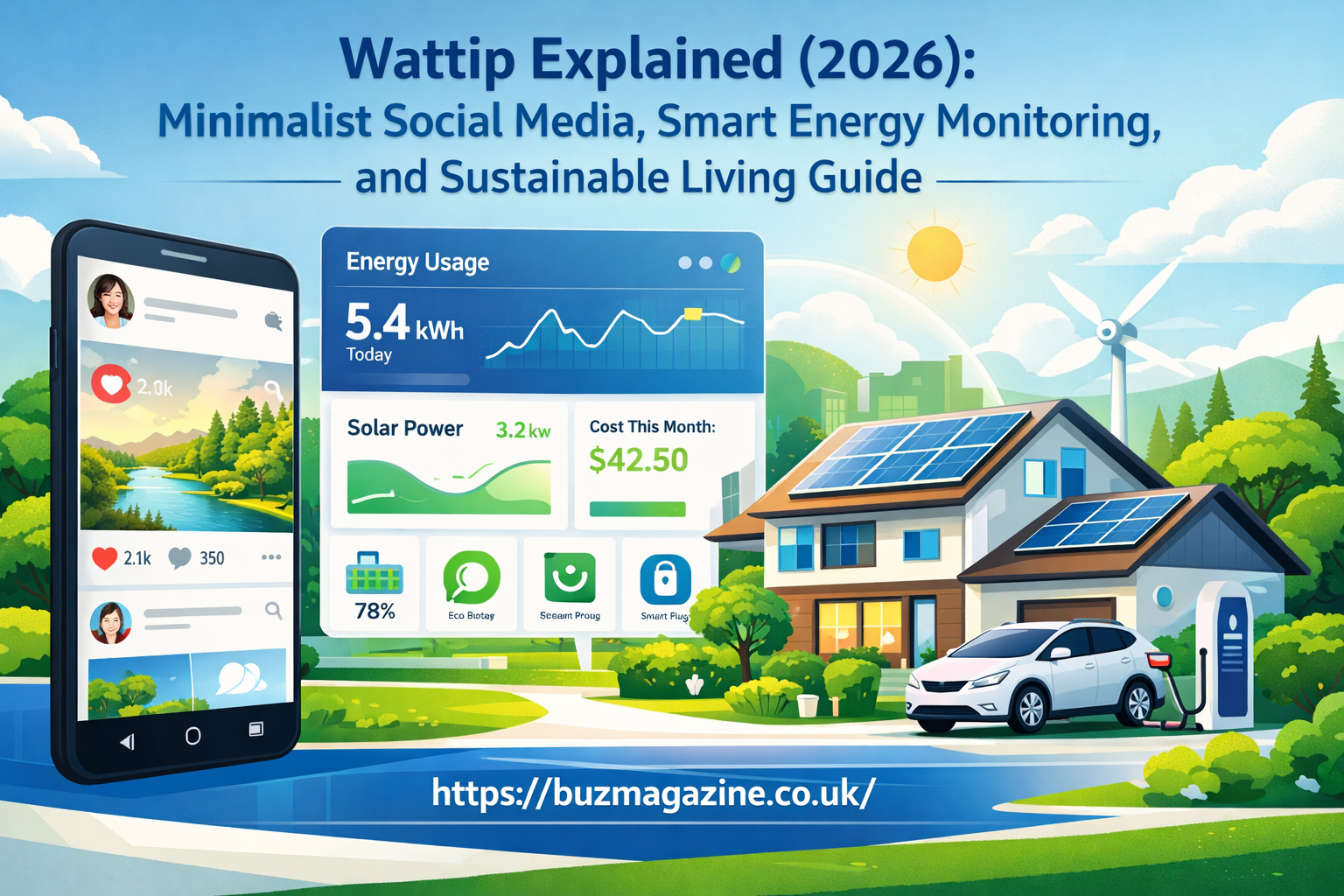
At its core, Wattip is a hybrid concept combining:
- A minimalist social media platform focused on privacy, meaningful connections, and digital well‑being.
- A smart energy monitoring system that provides real‑time insights into electricity usage and shows users exactly where, when, and how energy is consumed.
This duality may sound unconventional, but the uniting theme is intentional use — whether that’s intentional connection with others online, or intentional management of energy resources in the real world.
Wattip as a Minimalist Social Media Platform
In contrast to traditional social networks driven by advertising revenue, data tracking, and algorithmic feeds, Wattip’s social platform emphasizes:
- Privacy‑First Design: No ads, no data selling, encrypted communication
- Intentional Interaction: Curated communities and interest‑based engagement
- Minimal Digital Noise: A clean interface focused on meaningful content, not endless scrolling
- Mental Well‑Being: Tools and settings to reduce comparison culture, overwhelm, and digital addiction
These design choices aim to foster a healthier online environment where users control their experience, rather than being controlled by it.
Wattip as a Smart Energy Monitoring System
On the physical side, Wattip refers to a family of energy monitoring devices and systems that track electricity usage in real time. Unlike legacy meters that only provide monthly totals, Wattip devices measure:
- Instantaneous consumption in watts and kilowatt‑hours (kWh)
- Device‑level usage patterns
- Historical and trend data
- Abnormal spikes or potential system issues
These insights help users reduce waste, optimize usage, and lower bills — whether at home, in an office, or across industrial facilities.
2. Problems Wattip Solves
Challenges with Traditional Social Media
Conventional social networks often prioritize engagement metrics — likes, shares, ad clicks — over meaningful communication. This leads to:
- Addictive feed algorithms
- Data privacy concerns and exposure
- Echo chambers and misinformation
- Mental health impacts such as anxiety and digital fatigue
Wattip’s social platform tackles these issues by removing ad‑driven incentives and focusing on user choice and privacy.
Challenges with Conventional Energy Monitoring
Traditional energy meters provide limited insight — mostly monthly or periodic readings — and offer no visibility into how energy is actually used during the day. That creates several problems:
- Inefficient use of electricity because consumers don’t know when or where it’s wasted
- Difficulty identifying devices that consume excessive power
- Harder ability to participate in energy saving or demand response programs
Smart monitoring like Wattip offers real‑time feedback so users can respond instantly, rather than waiting for a monthly bill to reflect inefficiencies.
3. Wattip Social Platform: Features & Benefits
Ad‑Free, Algorithm‑Free Feed
Unlike mainstream social media, Wattip doesn’t push content based on ad revenue. There’s no algorithm manipulating what users see — you only see what you choose.
Privacy & Encrypted Messaging
Privacy is baked into the platform’s DNA. Communication between users is encrypted, and no user data is sold or monetized.
Interest‑Based Communities
Users can join groups based on hobbies, industries, or passions, fostering intentional engagement centered around shared interests.
Healthier Digital Habits
By eliminating addictive features and clutter, Wattip encourages users to spend more meaningful, focused time online.
4. Wattip Energy Monitoring System: Features & Benefits
The energy side of Wattip shines because it turns raw electrical data into actionable insights, enabling users to understand and optimize their energy usage in ways traditional meters never could.
Real‑Time Power Tracking
Wattip devices provide moment‑by‑moment data on how much power is consumed, helping users identify spikes, inefficiencies, and waste instantly.
Device‑Level Insights
Many Wattip systems can break down energy use by device or circuit, revealing which appliances or systems are consuming the most power.
IP‑Rated Rugged Hardware
For outdoor or industrial environments, Wattip devices often come with IP ratings (Ingress Protection), such as IP65 or higher, ensuring protection against dust and water.
AI‑Driven Alerts and Predictive Insights
Advanced models can send real‑time alerts for unusual consumption and offer tips on how to save more energy. These AI features help users stay ahead of issues before they affect their bills.
Historical Trends & Dashboards
Users get visual charts and reports showing usage patterns across hours, days, weeks, or months — all accessible via mobile apps or web dashboards.
5. Understanding Watt and IP Ratings
What is a Watt?
A watt (W) measures the rate at which energy is used or produced. For example, a 100W light bulb consumes 100 watts of power per second it’s on.
What is an IP Rating?
IP ratings define how well a device resists dust and water. For instance:
- IP65: Dust tight + water jets
- IP67: Dust tight + temporary immersion
Higher IP ratings mean better durability in harsh conditions.
6. Wattip Product Categories and Real‑World Use Cases
Wattip systems are diverse in their applications, serving both simple household use and complex organizational needs.
Residential Homes
Homes use Wattip to:
- Monitor HVAC systems and kitchen appliances
- Detect phantom loads from devices in standby
- Track usage patterns and reduce energy waste
Studies show smart monitoring can reduce household consumption by 3‑5% simply by making usage visible in near real‑time.
Commercial Offices
Offices use Wattip to:
- Track lighting and HVAC systems
- Balance load scheduling to avoid peak charges
- Allocate tenant energy usage fairly
Industrial Facilities
Heavy machinery and factory setups benefit from:
- Power quality monitoring
- Predictive maintenance based on current draw
- Reduced downtime through early alerts
Municipal & Smart Cities
City infrastructure such as:
- Street lighting
- Traffic signals
- Parks, public facilities
can be centrally monitored to reduce waste and schedule efficient operation times.
Renewable Energy Integration
Wattip can integrate solar panels or battery systems to show:
- Self‑consumption vs grid usage
- Peak solar production times
- Optimal dispatch of renewable energy
7. How Wattip Works
The effectiveness of Wattip comes from a layered architecture combining hardware, firmware, and software.
Hardware Layer
This includes sensors (like CT clamps or shunt elements), rugged enclosures, and connectivity modules that gather raw electrical data.
Firmware Layer
Firmware filters noise, logs meaningful events, applies thresholds (e.g., overload alerts), and sends data securely to the cloud or app.
Software / Cloud Layer
From the cloud, data is transformed into visual dashboards, actionable notifications, AI insights, and historical trends.
8. Wattip vs Traditional Alternatives
Energy Monitoring
Traditional meters only record consumption over time with no context, while Wattip offers real‑time breakdown, remote access, alerts, and predictive insights.
Social Platforms
Traditional social networks are designed around engagement metrics and ads, whereas Wattip prioritizes privacy, purposeful engagement, and user control.
9. Benefits of Using Wattip
Energy Efficiency & Cost Savings
Real‑time monitoring enables users to identify waste and shift usage to off‑peak hours, often resulting in 10–20% electricity bill reduction within months of use.
Safety & Predictive Maintenance
By spotting abnormal spikes or overloads early, Wattip helps prevent equipment failure and reduce emergency repair costs.
Compliance & Carbon Tracking
Wattip’s data provides a foundation for ESG reporting, carbon footprint analysis, and sustainability certifications.
Digital Well‑Being
On the social side, users benefit from intentional interaction, reduced digital fatigue, and improved online experiences.
10. Installing and Using Wattip
Setting up Wattip is straightforward:
- Choose the right model for your environment and load size.
- Install hardware on panels or circuits (professional installation is recommended for mains connections).
- Connect to the network via Wi‑Fi or other industrial protocols.
- Download the app/dashboard and customize alerts and KPIs.
Wattip dashboards allow trend visualization, reporting, alerts, and performance tracking — empowering you to act on data, not just view it.
11. Common Misconceptions & Challenges
- “Wattip is too expensive.”
Higher upfront costs often pay off through energy savings and reduced maintenance. - “All IP ratings are the same.”
Devices with higher IP ratings (e.g., IP67) are far more resilient than basic IP65 units. - “Anyone can install it safely.”
Mains or panel installs should always be done by a licensed electrician. - “All digital platforms are the same.”
Wattip’s privacy and ad‑free design set it apart from engagement‑driven networks.
12. Why Wattip Supports Sustainable Living and Smart Cities
Wattip enables energy budgets to be planned more effectively, peak loads to be optimized, and public infrastructure to operate efficiently. These capabilities align with smart city goals, where real‑time data is vital for planning and reducing environmental impact.
13. The Future of Wattip
AI‑Driven Predictions
Automated scheduling, usage forecasting, and anomaly detection will make Wattip even more powerful over time.
Machine Learning Optimization
Over time, AI can recommend device‑specific adjustments that improve efficiency.
Smart Grid Integration
Seamless interaction with utility grids and demand‑response systems could position Wattip as a key tool in managing energy demand at scale.
Enhanced Social Features
Future social capabilities may include decentralized storage, encrypted group spaces, and tools to further prioritize meaningful engagement over engagement for engagement’s sake.
14. Final Thoughts
Wattip is more than technology — it’s a philosophy that champions transparency, intentional living, privacy, and sustainability. Whether you’re seeking a healthier digital experience or a smarter way to manage energy, Wattip delivers real, measurable benefits that empower users and communities alike.
15. FAQs About Wattip
Q1. What is Wattip?
Wattip is a dual‑purpose innovation: a minimalist social media platform and a smart energy monitoring system designed to promote intentional living and sustainability.
Q2. How does Wattip help save energy?
By providing real‑time usage data, actionable insights, and device‑level breakdowns, Wattip empowers users to reduce waste and lower bills.
Q3. Is Wattip safe and privacy‑friendly?
Yes. Wattip’s social platform emphasizes encrypted communication and minimal data tracking, while the energy system securely handles telemetry.
Q4. Can Wattip be used in homes and businesses?
Absolutely — Wattip scales from single‑family homes to commercial offices and larger industrial or municipal environments.
Q5. What makes Wattip different?
Its combination of real‑time energy insights, rugged hardware, ethical digital design, and intentional social interaction sets it apart from typical platforms and tools.