



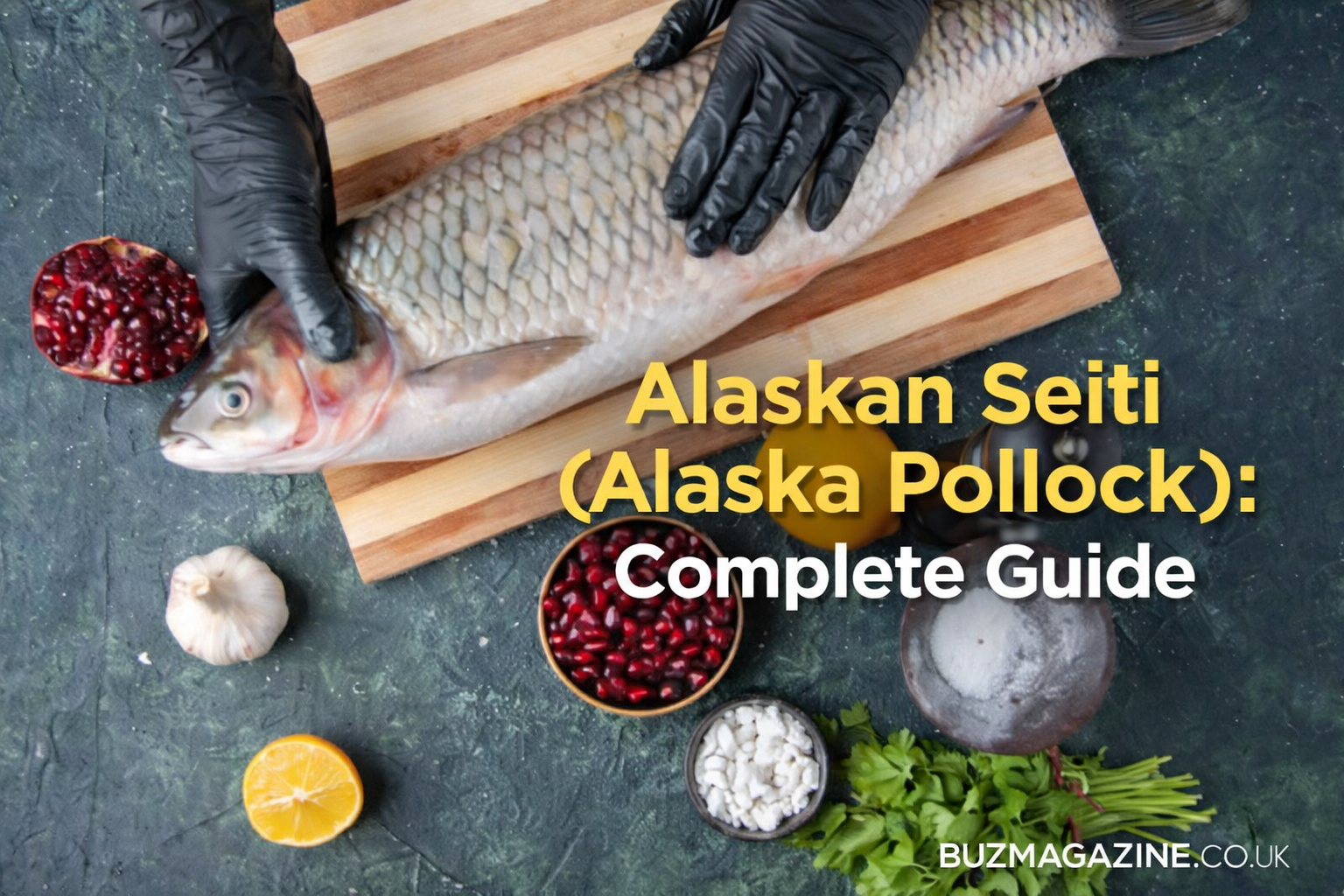
Alaskan Seiti — better known in most markets as Alaska pollock — is one of the world’s most abundant and versatile seafood species. From humble frozen fillets to imitation crab (surimi), this mild, flaky whitefish feeds millions and plays a major role in global food systems. In this guide, you’ll learn everything about Alaskan Seiti: what it is, where it comes from, its nutritional and sustainability profile, how it’s caught and cooked, and why it matters economically and culturally.
What Is Alaskan Seiti?
Alaskan Seiti isn’t a separate species — it’s a trade or marketing name commonly used for Alaska pollock (scientific name: Gadus chalcogrammus). It’s a member of the cod family (Gadidae), which explains why its texture and culinary behavior are similar to cod but usually more affordable.
Alaskan Seiti vs Alaska Pollock — Are They the Same?
Yes — “Alaskan Seiti” and “Alaska pollock” refer to the same fish. When you see “Seiti” on packaging or menus, treat it as pollock, just positioned as a premium or origin‑focused label.
Scientific Classification
- Kingdom: Animalia
- Phylum: Chordata
- Class: Actinopterygii
- Order: Gadiformes
- Family: Gadidae
- Species: Gadus chalcogrammus
Why the Name “Seiti”?
“Seiti” is often a marketing name used in European and upscale retail channels to highlight origin and evoke quality. But biologically, it’s simply pollock — the same species harvested in the Bering Sea and Gulf of Alaska.
Biology and Natural Habitat
Alaska pollock thrives in the cold, nutrient‑rich waters of the North Pacific Ocean.
Physical Characteristics & Size
Pollock has a slender body with silvery sides and an olive‑brown back. It typically reaches lengths of up to about 100 cm (almost 3.3 feet) in the wild.
Life Cycle and Schooling Behavior
Pollock are schooling fish that form large midwater groups. They spawn in northern seas, and larvae drift into rich feeding grounds that support rapid growth.
Preferred Environment
Pollock are adapted to cold environments and can be found from surface waters to depths of more than 500 meters in some parts of their range.
Major Fishing Regions
- Eastern Bering Sea – the largest U.S. source
- Gulf of Alaska – smaller but significant stocks
- Russian Far East & Sea of Okhotsk – major international contributions
Nutrition and Health Benefits
Alaskan Seiti is not just abundant — it’s also nutritious.
Nutritional Profile (per 100 g raw)
According to NOAA Fisheries, 100 g of raw pollock contains roughly:
- Calories: 81
- Protein: ~17 g
- Fat: ~0.8 g
- Omega‑3 fatty acids: present in beneficial amounts
- Selenium, B12, and other minerals: notable sources
Alaska Seafood Institute data shows pollock has 97 % of its calories from protein, making it exceptionally lean.
Health Benefits
- Lean, High‑Quality Protein: Helps build and repair tissues.
- Low in Saturated Fat: Heart‑healthy compared with many meats.
- Omega‑3 Fatty Acids: Support heart and brain health.
- Low Contaminants: Because of its position lower in the food chain, pollock tends to accumulate fewer heavy metals than larger predators.
Is It Safe for Regular Consumption?
Pollock is generally safe for regular inclusion in meals, including for families and many pregnant people — though individuals should always follow local dietary guidelines and medical advice.
Sustainability and Environmental Impact
One of the biggest selling points of Alaskan Seiti is its fishery’s sustainability record.
Science‑Based Management
Alaska pollock fisheries are among the most regulated and scientifically monitored in the world. Annual stock assessments determine quotas, and strict rules are in place to prevent overfishing. U.S. fisheries manage multiple dedicated stocks and use data from acoustic surveys and onboard observers.
Largest U.S. Fishery
Pollock is the largest single‑species fishery in the United States by volume, averaging around 1.3 million metric tons in the eastern Bering Sea annually.
Climate‑Friendly Protein Option
Analysis shows that wild Alaska pollock has one of the lowest carbon footprints per kg of protein compared with beef and pork, making it a relatively climate‑friendly animal protein choice.
MSC and Other Certifications
Alaska pollock fisheries — particularly in the Bering Sea and Aleutian Islands — hold Marine Stewardship Council (MSC) certification, which reflects sustainable catch practices.
Economic and Global Importance
Alaska pollock isn’t just food — it’s a major economic driver.
Production and Value
In the U.S. alone, commercial landings of Alaska pollock recently topped 3 billion pounds in a year, valued at around $525 million.
Export and Processing
A significant share of pollock is processed into surimi for Asian markets, roe, fillets, and other products — with Japan, the U.S., and Europe among the main destinations.
Jobs and Coastal Communities
The pollock fishery supports tens of thousands of jobs across harvesting, processing, logistics, and related industries, making it a backbone of many Alaskan coastal economies.
Culinary Uses of Alaskan Seiti
Alaskan Seiti is incredibly versatile in the kitchen.
Why It’s Popular
Its mild flavor and flaky white flesh adapt well to many recipes, from simple home dishes to global specialties.
Common Uses
- Fillets: Baked, pan‑seared, or battered & fried
- Fish sticks & nuggets: Popular with kids and families
- Surimi (Imitation Crab): Sushi, salads, and seafood snacks
- Stews & chowder: Holds shape but absorbs flavor well
Regional Culinary Traditions
Across cultures, pollock appears in many forms — steamed with Asian seasonings, dried or salted in East Asia, or as breaded portions in European meals.
How to Cook Alaskan Seiti at Home
Pollock is forgiving and quick to cook.
Basic Techniques
- Baking: 10–12 minutes at 400 °F (about 200 °C) after seasoning
- Pan‑Searing: 2–3 minutes per side until opaque
- Frying: Golden brown and crispy batter
- Steaming: Light and healthy with aromatics
Tips for Best Results
- Avoid overcooking to maintain moisture.
- Use bold seasonings or sauces — pollock readily absorbs flavor.
Simple Recipe Ideas
- Lemon‑Garlic Baked Seiti: Olive oil, lemon, and parsley
- Crispy Tacos: Batter‑fried strips with slaw
- Pollock Chowder: Cream‑based with potatoes and corn
- Coconut Curried Pollock: Simmered gently in fragrant spices
Choosing and Storing Alaskan Seiti
Fresh vs Frozen
Pollock is most often sold frozen — and flash‑frozen at sea is usually superior because it preserves texture and taste.
Selection Tips
Look for:
- Clear indication of origin (Alaska/Bering Sea)
- Minimal ice glaze (excess suggests refreezing)
- Clean ocean smell
Storage Guidelines
- Keep frozen at 0 °F (‑18 °C).
- Thaw in the refrigerator or under cold water.
- Cook within 24 hours after thawing.
Alaskan Seiti vs Other White Fish
Pollock vs Cod
Pollock is generally milder and more affordable, while cod tends to have a slightly firmer texture and richer taste.
Compared With Haddock or Tilapia
Pollock excels in consistency and adaptability but may lack the stronger flavor some cooks prefer in other whitefish.
Pros and Cons of Eating Alaskan Seiti
Advantages
- Affordable & abundant
- High‑protein, low‑fat choice
- Sustainable and well‑managed fishery
- Versatile in cooking and processing
Limitations
- Mild flavor may seem bland without seasoning
- Lower omega‑3s than oily fish like salmon
FAQs About Alaskan Seiti
Is Alaskan Seiti the same as Alaska pollock?
Yes — it’s simply the same fish under a market name.
Is it healthy?
Yes — lean protein, omega‑3s, vitamins, and minerals make it nutritious.
Is it sustainable?
Generally, yes — U.S. management and certifications show long‑term sustainability.
Does it taste fishy?
No — the taste is mild and adaptable.
Conclusion
Alaskan Seiti (Alaska pollock) is more than a humble frozen fillet — it’s one of the most important whitefish species globally. With strong sustainability credentials, high nutritional value, broad culinary appeal, and significant economic impact, pollock deserves recognition beyond its simple name. Whether you’re cooking at home, exploring global cuisine, or writing about sustainable seafood, Alaskan Seiti is a fish worth knowing.
ALSO READ: Calamariere: Meaning, History, Recipes, Chef Expertise & Cultural Evolution