



Introduction
The Glasgow water main break Shettleston Road incident became one of the most discussed infrastructure disruptions in the city’s East End in recent years. When a major underground water pipe suddenly ruptured beneath the busy roadway, it triggered flooding, road closures, and widespread water supply disruption for residents and businesses. The unexpected failure quickly escalated from a local maintenance issue into a citywide concern as emergency crews worked to contain the damage and restore service.
Water main breaks are not uncommon in large cities with aging infrastructure, but the Shettleston Road event highlighted how vulnerable essential services can be when critical systems fail. Within hours of the rupture, traffic congestion spread across surrounding streets, commuters faced delays, and many households experienced low pressure or a complete loss of water supply.
Beyond the immediate inconvenience, the incident raised broader questions about the resilience of urban water networks and the importance of regular infrastructure maintenance. With Glasgow’s water system serving hundreds of thousands of residents through a network of pipes that in some areas are over a century old, incidents like this highlight the need for modernisation and proactive planning.
This detailed guide explores every aspect of the Glasgow water main break on Shettleston Road—including what happened, the timeline of events, the causes behind the rupture, the impact on residents and businesses, and what authorities are doing to prevent similar disruptions in the future.
Where Did the Glasgow Water Main Break Occur?
The burst water main occurred along Shettleston Road in Glasgow’s East End, a busy urban route that connects residential areas, shops, and public transport services. The rupture was reported near the junction with St Mark Street and Hart Street, close to several key local landmarks.
Shettleston Road is an important traffic corridor used daily by commuters, bus routes, and local businesses. Because of its strategic location, any disruption along this stretch quickly affects surrounding neighbourhoods and transport networks.
Nearby Areas and Landmarks
The affected stretch of road lies close to several prominent locations, including:
- Shettleston railway station
- The Forge Shopping Centre
- Shettleston Public Park
- Nearby residential areas within the G31–G32 postcode districts
When the pipe burst, water rapidly spread across the road and pavements, forcing authorities to close sections of the street to protect motorists and pedestrians.
Why This Location Matters
Shettleston Road is more than just a local street—it acts as a key link between eastern neighbourhoods and central Glasgow. With buses, delivery vehicles, and commuters relying on the route daily, the water main break caused immediate traffic congestion and disrupted normal city activity.
Timeline of the Shettleston Road Water Main Break
Understanding the timeline of the incident helps illustrate how quickly events unfolded and how authorities responded to the emergency.
Early Morning Reports
The disruption began early on the morning of 29 May 2025, when residents noticed flooding on the street and a sudden drop in water pressure inside their homes. Some people reported cloudy or brown water coming from taps before supply was completely interrupted.
Within a short time, the issue was traced to a major rupture in an underground water main beneath Shettleston Road.
Emergency Response
Shortly after the first reports, emergency teams and engineers from the regional water utility arrived at the scene to assess the damage and prevent further flooding. Authorities confirmed that crews were on site responding to the burst pipe and investigating the impact on the surrounding water supply network.
Road Closures and Safety Measures
As water flooded parts of the roadway, local officials closed sections of Shettleston Road and implemented traffic diversions to keep drivers and pedestrians safe. Buses were rerouted, and motorists were advised to avoid the area if possible.
Repair and Restoration
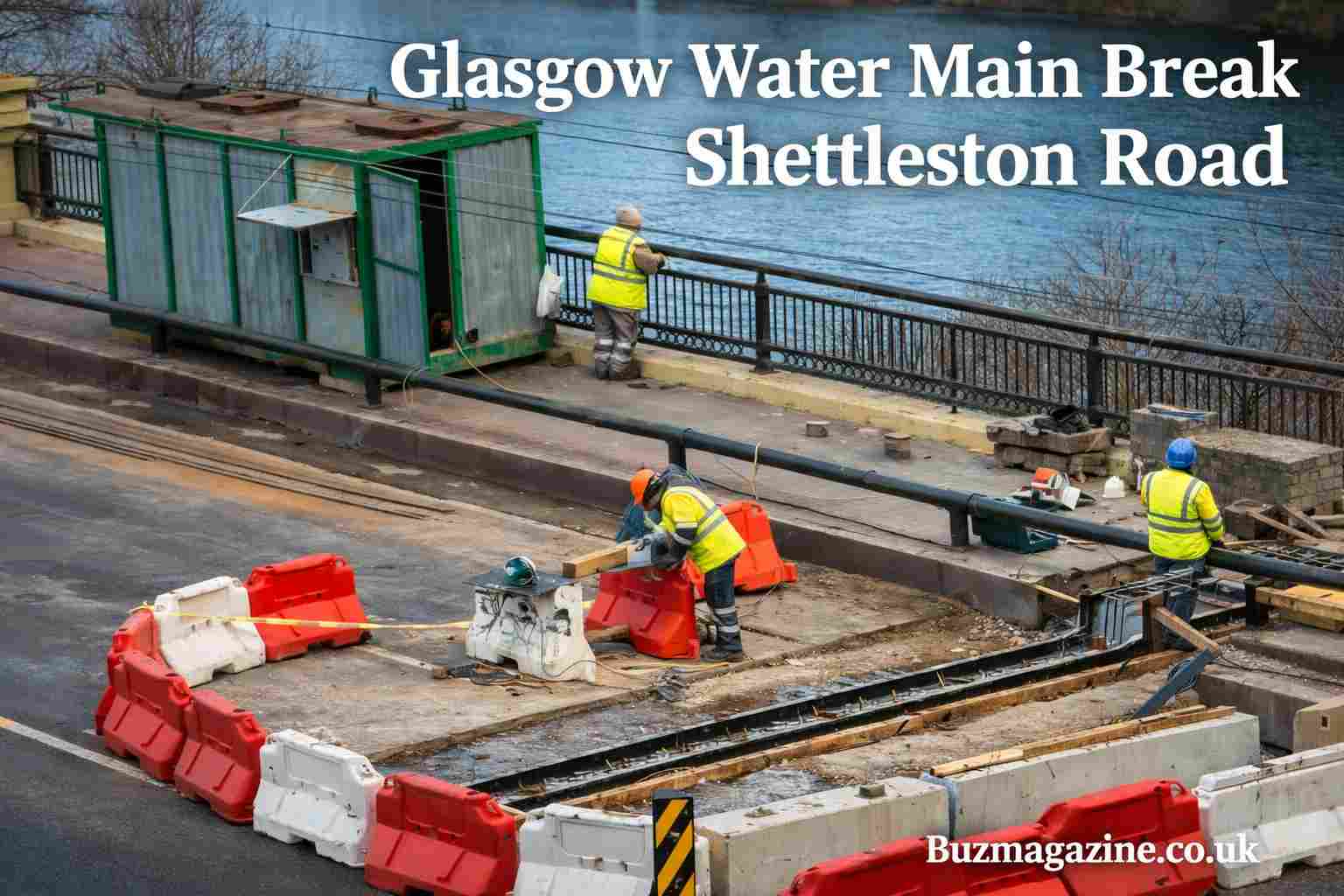
Over the next several hours, engineers worked to isolate the damaged pipe and begin repair operations. Heavy machinery was used to excavate the road surface and expose the affected section of pipeline. Once repairs were completed, water supply was gradually restored to homes and businesses in the surrounding area.
What Caused the Glasgow Water Main Break?
Water main failures rarely occur without underlying causes. In the case of the Glasgow water main break Shettleston Road, several factors likely contributed to the rupture.
Ageing Underground Infrastructure
One of the most significant reasons for water main breaks is aging infrastructure. Much of Glasgow’s water system was installed decades ago, and some pipes date back more than 80 years. As materials age, they become more vulnerable to corrosion, cracks, and structural failure.
Older cast-iron pipes, which were commonly used in early water networks, are particularly susceptible to damage over time.
Pressure Changes in the Water Network
Urban water systems operate under high pressure to deliver water to thousands of homes simultaneously. Sudden pressure changes—caused by demand fluctuations or valve operations—can place additional stress on aging pipes.
If a pipe already has weaknesses or small cracks, pressure surges can cause it to rupture.
Environmental and Weather Factors
Environmental conditions can also play a role in pipe failures. In colder climates like Scotland, freezing temperatures can cause soil to shift and pipes to contract. When temperatures rise again, the ground expands, increasing pressure on underground infrastructure.
Heavy rainfall, ground movement, and seasonal temperature changes all contribute to the long-term deterioration of water pipelines.
External Damage
In busy urban areas, underground utilities are constantly exposed to potential disturbances from construction activity, roadworks, and heavy traffic. Excavation projects or vibrations from vehicles may weaken the surrounding soil and affect pipe stability.
Immediate Impact on Residents and Homes
The burst water main had an immediate effect on the daily lives of people living near Shettleston Road.
Loss of Water Supply
Many households experienced a temporary loss of running water as engineers shut down sections of the network to prevent further flooding and carry out repairs. Without water, routine activities such as cooking, cleaning, and bathing became difficult.
Low Pressure and Discoloured Water
In areas where water continued to flow, residents reported reduced pressure and discoloured water. This often happens when sediment inside pipes becomes disturbed during a break or repair.
Household Challenges
For families, especially those with young children or elderly members, even a short disruption to water supply can be stressful. Access to clean drinking water is essential for hygiene and health, which is why utility providers often arrange alternative supplies if repairs take longer than expected.
Impact on Local Businesses and Services
Local businesses along Shettleston Road also faced challenges due to the water main break.
Temporary Closures
Many shops, cafés, and restaurants rely on a steady water supply to operate. When water pressure dropped or supplies were cut off entirely, some businesses were forced to close temporarily.
Reduced Customer Traffic
Road closures and diversions meant fewer customers were able to access shops in the area. For small businesses that depend on daily foot traffic, even a short interruption can lead to financial losses.
Service Disruptions
Businesses providing services such as hair salons, car washes, and food preparation were particularly affected because these operations require large amounts of water.
Road Closures, Flooding, and Traffic Disruption
One of the most visible effects of the Glasgow water main break Shettleston Road was the flooding of nearby streets.
When the pipe burst, water quickly surged onto the road surface, creating hazardous conditions for drivers and pedestrians. Authorities closed sections of the road to prevent accidents while repair teams worked to stop the leak.
Traffic diversions were put in place, directing vehicles through alternative routes across the East End of Glasgow. These changes led to congestion during peak commuting hours.
Public Transport Changes During the Incident
Public transport services were also affected by the water main break.
Bus routes that normally travel along Shettleston Road had to be temporarily diverted, and some stops were closed while crews worked in the area. Passengers were advised to check transport updates before traveling.
Delays were common during the incident, particularly during the morning rush hour when commuters rely heavily on bus services.
Emergency Response and Repair Operations
Repairing a burst water main in a busy urban area is a complex task requiring coordination between engineers, emergency services, and local authorities.
Initial Assessment
Engineers first inspected the area to determine the exact location and severity of the rupture.
Excavation Work
Once the damaged section of pipe was identified, crews excavated the road surface using heavy machinery to expose the pipeline.
Pipe Repair or Replacement
Depending on the extent of the damage, technicians either patched the pipe or replaced a section of it with new materials.
Safety Measures
Traffic barriers, warning signs, and temporary fencing were installed to ensure the safety of workers and the public during the repair process.
How Water Supply Is Restored After a Pipe Burst
Restoring water supply after a major pipe failure involves several technical steps.
Isolating the Damaged Pipe
Engineers first close valves around the affected section to prevent water from flowing into the damaged area.
Pressure Testing
After repairs are completed, the pipeline is gradually re-pressurised to ensure it can withstand normal operating pressure without leaking.
Flushing the System
Pipes are flushed with clean water to remove sediment and debris that may have accumulated during the repair.
Water Quality Testing
Samples are taken and tested to confirm that the water meets safety standards before full supply is restored.
Is Tap Water Safe After a Water Main Break?
Following a water main repair, residents sometimes notice brown or cloudy water coming from their taps. This usually happens because sediment inside the pipes becomes disturbed.
In most cases, the issue resolves quickly once the system has been flushed. Residents are typically advised to run cold taps for a few minutes until the water runs clear.
If discoloration persists, contacting the local water utility for further guidance is recommended.
What Residents Should Do During a Water Main Break
Residents can take several practical steps to stay safe and manage disruptions during a water main incident.
Recommended actions include:
- Keep a small supply of bottled water for emergencies
- Avoid contact with floodwater in affected streets
- Turn off appliances connected to water if supply is interrupted
- Report leaks or unusual water pressure to the utility provider
- Follow official updates for repair progress
Having basic emergency supplies at home can help households manage temporary service interruptions more comfortably.
Business Impact and Insurance Considerations
For businesses affected by infrastructure disruptions, documenting losses is important.
Owners are often advised to:
- Take photos of damage
- Keep records of lost operating hours
- Contact their insurance provider promptly
Depending on the circumstances and insurance coverage, some businesses may be eligible for compensation for losses caused by utility interruptions.
Long-Term Infrastructure Concerns in Glasgow
The Shettleston Road incident highlights a broader issue facing many cities: aging water infrastructure.
Glasgow’s water network includes thousands of miles of pipelines, some of which date back more than a century. Maintaining such a large system requires ongoing investment and careful monitoring.
Without regular upgrades, older pipes are more likely to fail under pressure.
Community Response and Local Support
Despite the disruption, the incident also demonstrated strong community cooperation. Residents shared updates on social media and helped neighbours access information about water supplies and road closures.
Local authorities and emergency services coordinated closely with utility engineers to restore normal conditions as quickly as possible.
How to Stay Updated on the Glasgow Water Main Break
Residents seeking information about water supply disruptions can check official sources such as the water utility’s website or contact helplines for updates. Utilities often provide 24-hour support lines for reporting leaks or outages.
Signing up for alert services can help residents receive notifications about incidents affecting their area.
Lessons Learned from the Shettleston Road Incident
Several key lessons emerged from the Glasgow water main break Shettleston Road event:
- Infrastructure maintenance is essential for preventing failures
- Rapid response from emergency crews can minimise disruption
- Clear communication helps residents stay informed
- Cities must invest in modernising aging water systems
Conclusion
The Glasgow water main break Shettleston Road incident serves as a powerful reminder of how vital urban infrastructure is to everyday life. A single pipe failure disrupted traffic, interrupted water supply, and affected businesses across the East End of Glasgow.
While emergency crews were able to repair the damage and restore services, the event highlighted the challenges cities face when maintaining aging water networks. With growing populations and increasing demand on utilities, proactive investment in modern infrastructure will be essential to prevent similar incidents in the future.
By learning from events like this and strengthening maintenance programs, Glasgow and other cities can build more resilient water systems that continue to serve residents reliably for decades to come.
Frequently Asked Questions
What caused the Glasgow water main break on Shettleston Road?
The rupture was likely caused by a combination of aging infrastructure, pressure changes in the water network, and environmental factors affecting underground pipes.
Which areas were affected by the water outage?
Areas around Shettleston Road in Glasgow’s East End, particularly in the G31 and G32 postcode districts, experienced water supply disruptions.
How long did repairs take?
Repair times can vary depending on the severity of the damage, but in many similar incidents water supply is restored within hours or a few days.
Is tap water safe after repairs?
Discoloured water can occur temporarily after repairs due to disturbed sediment, but it usually clears after flushing taps for a short time.
Who should residents contact during emergencies?
Residents can contact their water utility’s emergency helpline or report issues through official websites and social media channels for updates and assistance.
ALSO READ: dfcbktr Explained: Why This Random Online String Attracts Attention