




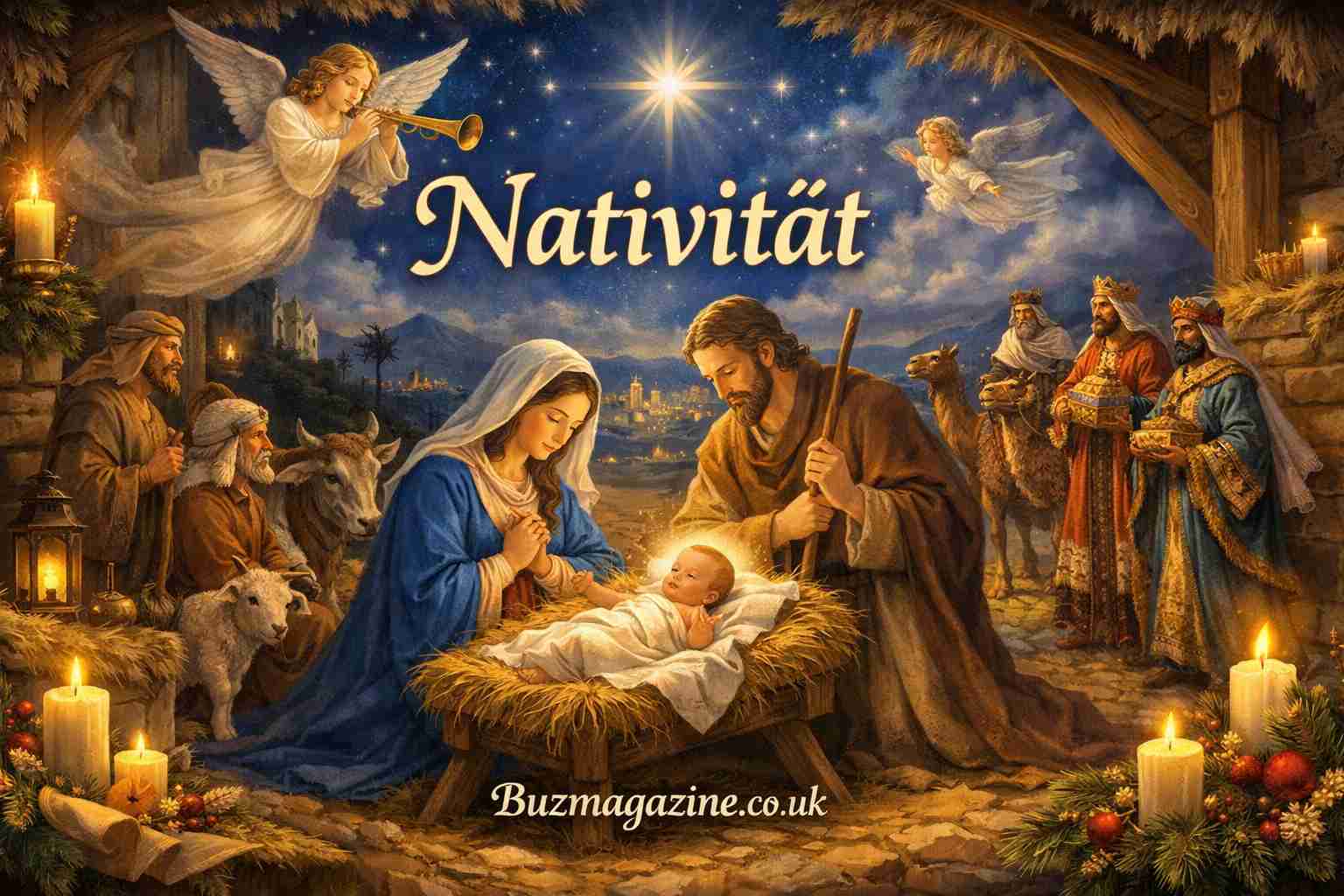
Nativität, the German word for “Nativity,” refers to the birth of Jesus Christ—one of the most significant events in human history and the foundation of the Christian faith. Celebrated worldwide during Christmas, the Nativity is not just a historical moment but a powerful symbol of hope, humility, and divine love.
Over two billion Christians across the globe commemorate this event every year, making it one of the most widely observed religious celebrations in the world. The Nativity story, rooted in biblical texts and shaped by centuries of tradition, continues to influence culture, art, and society today.
In this comprehensive guide, we explore everything about Nativität—from its biblical origins and theological meaning to global traditions, symbolism, and modern relevance.
What Is Nativität?
Nativität means “birth” and originates from the Latin word nativitas. In Christianity, it specifically refers to the birth of Jesus Christ in Bethlehem over 2,000 years ago.
For believers, this moment marks the arrival of the Son of God into the world—a turning point in history that fulfilled ancient prophecies about the coming of a Messiah.
The Nativity is central to Christmas, a festival that began as a Christian celebration of Jesus’ birth and later evolved into a global cultural holiday embraced by both religious and secular communities .
The Nativity Story in the Bible
The story of Jesus’ birth is primarily told in the Gospels of Matthew and Luke, each offering a unique perspective.
The Gospel of Matthew (Joseph, Magi, Star)
Matthew’s account focuses on Joseph and emphasizes Jesus’ royal lineage. It includes:
- The genealogy linking Jesus to King David
- An angel appearing to Joseph in a dream
- The visit of the Magi (Wise Men)
- The guiding star leading them to Bethlehem
Matthew highlights Jesus as the promised King and fulfillment of prophecy.
The Gospel of Luke (Mary, Shepherds, Angels)
Luke provides a more detailed and emotional narrative:
- Mary and Joseph travel to Bethlehem for a census
- Jesus is born in a humble manger
- Angels announce the birth to shepherds
- Shepherds visit and spread the news
Luke’s account emphasizes humility and inclusiveness, showing that the message of Jesus is for everyone.
Key Events of the Nativity Story (Simple Summary)
- Mary receives divine news from angel Gabriel
- Joseph accepts his role after a dream
- The couple travels to Bethlehem
- Jesus is born in a stable
- Angels announce the birth
- Shepherds and Wise Men visit
Interestingly, only Matthew and Luke describe the Nativity, while earlier texts like Mark do not include the birth story .
Historical Background of the Nativity
The Nativity is believed to have occurred between 6 and 4 BCE, during the reign of King Herod .
Key historical elements include:
- Bethlehem: A small town in Judea, associated with King David
- Roman Census: Ordered by Emperor Augustus
- Early Christianity: Initially focused more on Jesus’ death and resurrection
The celebration of Jesus’ birth as a formal feast (Christmas) only began in the 4th century, centuries after the event itself .
The Theological Meaning of Nativität
The Incarnation (God Becoming Human)
The Nativity represents the Incarnation—God entering the human world in the form of Jesus Christ.
Fulfillment of Old Testament Prophecies
Christians believe Jesus’ birth fulfilled prophecies about a Messiah from the lineage of David.
Symbol of Hope, Salvation, and Peace
The Nativity symbolizes hope for humanity, offering salvation and reconciliation with God.
Why Jesus Was Born in Humility
Jesus’ birth in a stable reflects:
- God’s closeness to the poor
- The value of humility
- A message that greatness is not tied to wealth or power
Symbolism in the Nativity Story
The Manger and Stable
Represents simplicity and humility.
The Star of Bethlehem
Symbolizes divine guidance and truth.
The Shepherds
Represent ordinary people and inclusivity.
The Three Wise Men and Their Gifts
- Gold: Kingship
- Frankincense: Divinity
- Myrrh: Sacrifice
These symbols add deeper meaning to the story and enrich its spiritual message.
Nativity Scenes (Krippe) and Their History
Nativity scenes, also known as Krippe, are visual representations of Jesus’ birth.
Origin by Saint Francis of Assisi
The first nativity scene was created in 1223 to help people understand the story.
Evolution of Nativity Displays
Over time, these scenes became more detailed and artistic.
Popular Materials and Designs
- Wood
- Clay
- Porcelain
Nativity Scenes in Germany and Europe
Germany is especially known for elaborate nativity displays in Christmas markets.
Nativity scenes remain a central symbol of Christmas traditions worldwide .
How Nativität Is Celebrated Around the World
Germany (Christmas Markets & Krippe)
Famous for handcrafted nativity scenes and festive markets.
Mexico (Las Posadas)
Reenacts Mary and Joseph’s search for shelter.
Italy & Spain
Feature elaborate nativity displays with local elements.
Philippines (Simbang Gabi)
Nine days of prayer leading up to Christmas.
United States & Western Traditions
Include nativity plays, decorations, and community events.
Modern-Day Nativity Celebrations
Today, the Nativity is celebrated through:
- Midnight Mass and church services
- Nativity plays and pageants
- Christmas decorations and displays
- Carols like “Silent Night”
These traditions blend religious meaning with cultural expression.
The Cultural and Artistic Influence of Nativität
The Nativity has inspired:
- Renaissance paintings
- Sculptures and architecture
- Music and carols
- Films and plays
It has been depicted in art since early Christianity and continues to inspire modern media .
Lessons We Can Learn from Nativität
Faith and Trust
Mary and Joseph trusted God despite uncertainty.
Humility and Simplicity
Greatness can come from humble beginnings.
Love and Compassion
The Nativity emphasizes unconditional love.
Generosity and Giving
Inspired by the gifts of the Magi.
Teaching Children About the Nativity
Parents can teach the Nativity through:
- Storytelling
- Nativity scenes
- Christmas plays
- Family traditions
This helps children understand deeper values beyond material gifts.
The Commercialization of Christmas vs True Meaning of Nativität
Over time, Christmas has become increasingly commercialized, focusing on gifts and sales rather than spiritual meaning.
This tension between religious and cultural Christmas has existed for centuries .
The Nativity remains a reminder of:
- Simplicity
- Faith
- Love
Why Nativität Still Matters Today
Even in modern society, the Nativity continues to resonate:
- It offers hope in uncertain times
- Promotes peace and unity
- Encourages kindness and compassion
With over 2 billion Christians worldwide, the message of the Nativity continues to shape global culture and values.
Frequently Asked Questions (SEO Boost)
What does Nativität mean?
It means “birth” and refers to the birth of Jesus Christ.
Where was Jesus born?
Traditionally, Bethlehem in Judea.
Why is the Nativity important?
It marks the arrival of the Messiah and symbolizes salvation.
Who were the Three Wise Men?
Magi who brought gifts to honor Jesus.
How is the Nativity celebrated today?
Through church services, nativity scenes, carols, and family traditions.
Conclusion
Nativität is far more than a historical event—it is a timeless symbol of hope, love, and divine presence in the world. From humble beginnings in a manger to global celebrations embraced by billions, the Nativity continues to inspire faith, compassion, and unity.
Whether viewed through a religious or cultural lens, its message remains powerful: light can shine even in the darkest moments, and small beginnings can change the course of history.
As we reflect on the Nativity, we are reminded of what truly matters—love, humility, and the enduring hope for a better world.
ALSO READ: Guia Silent Hill Geekzilla Completo 2026: Personagens, Monstros, Puzzles e Todos os Segredos