



In an era where digital threats are constantly evolving, securing online accounts and personal data is more than just a best practice — it’s essential. Traditional passwords have been the backbone of digital security for decades, but they are now widely considered outdated due to weaknesses like reuse, phishing, and brute‑force attacks. The world of cybersecurity is shifting toward more secure and user‑friendly authentication methods, and one of the most promising innovations in this space is Mypasokey — a next‑generation solution designed to replace passwords with robust, intelligent, and secure authentication.
In this comprehensive guide, we’ll explore everything you need to know about Mypasokey — from how it works and why it matters to real‑world benefits, setup steps, limitations, and future trends in passwordless authentication. Along the way, you’ll learn how Mypasokey can transform your approach to online security and digital convenience.
1. What Is Mypasokey and Why It’s Trending
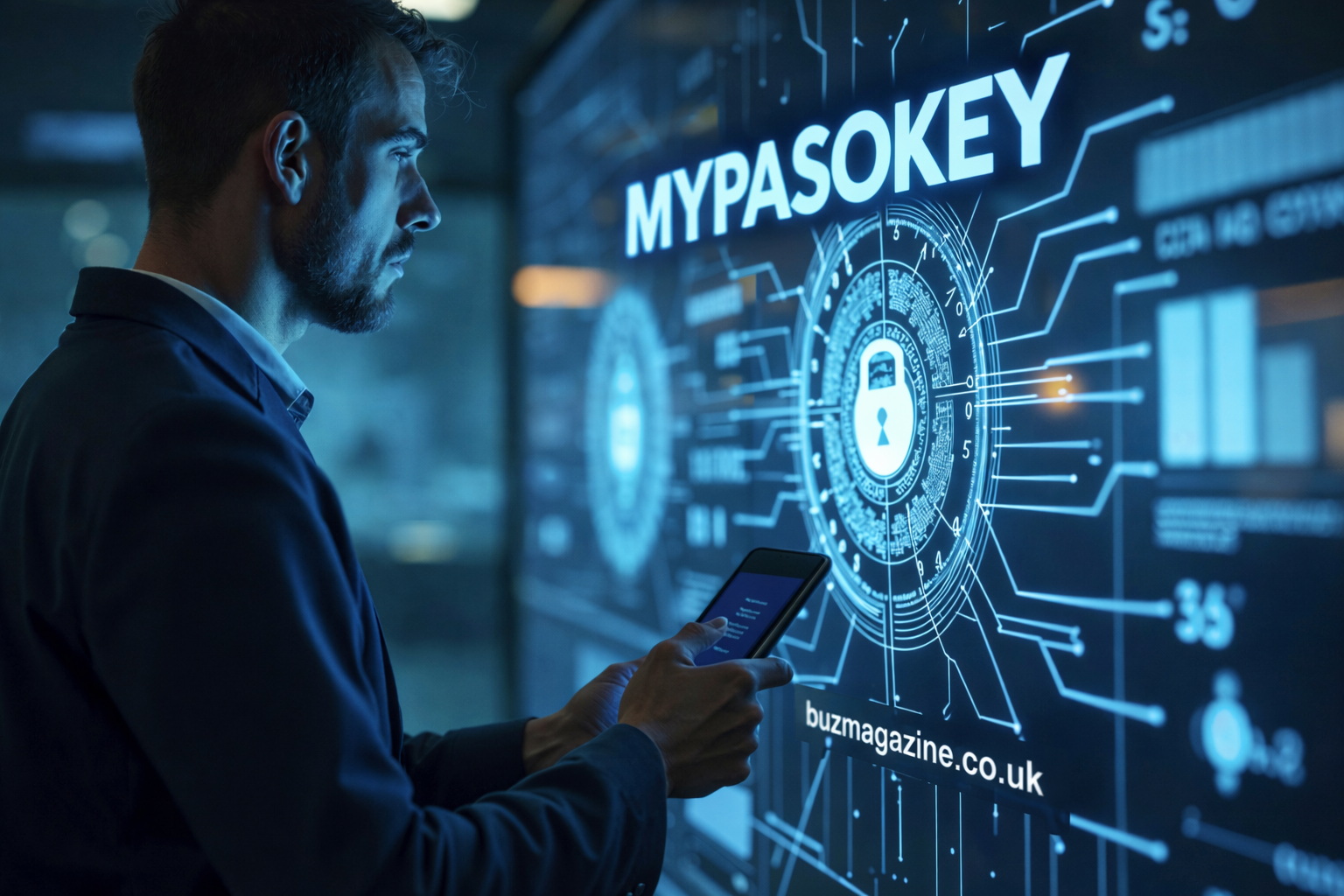
At its core, Mypasokey is a digital access solution that removes the need for traditional passwords and instead uses cryptographic door keys — also known as passkeys — stored securely on your device.
Users search for Mypasokey because it promises to solve one of the biggest digital frustrations of the modern age: remembering dozens or even hundreds of passwords while trying to stay secure. Instead of relying on a password that can be guessed, reused, or stolen, Mypasokey generates a unique encrypted digital key that lives on your device and authenticates your identity securely without exposing your credentials to the server or hackers.
This shift from password‑based login to digital passkey authentication reflects a broader cybersecurity trend that major platforms are rapidly adopting.
2. Why Strong Password Management Still Matters
Before diving deeper into Mypasokey, it’s important to understand why passwords — and managing them well — have been such a longstanding security issue.
The Password Problem
- Passwords are everywhere: The average person manages hundreds of different login credentials for work, shopping, social, email, finance, and more.
- Human behavior weakens security: Surveys show that many users reuse passwords across accounts, store them in unsafe places, or rely on memory and pen‑and‑paper notes — making them vulnerable.
- Breaches are common: Cybersecurity researchers reported over 16 billion compromised credentials exposed online in aggregated breaches — far exceeding the global population due to duplicate accounts and reuse.
It’s clear that weak password practices fuel data breaches, phishing attacks, and identity theft. Even security experts acknowledge that traditional passwords alone are no longer enough to protect modern digital lives.
This glaring insecurity is why alternatives like Mypasokey have become so relevant.
3. How Mypasokey Works
Device‑Based Authentication
Unlike traditional systems that store passwords on a server, Mypasokey uses your device as a secure vault for authentication. When you register, Mypasokey generates a pair of cryptographic keys — a private key that stays on your device and a public key stored with the service.
This method provides several strong security benefits:
- Phishing resistance: Because authentication doesn’t require typing a password, phishing websites can’t trick you into giving useful credentials.
- No shared secret: The public key stored by the service is useless without the private key stored on your device.
- Local verification: Your device handles the authentication using built‑in biometric or PIN security.
Zero‑Knowledge Architecture
Mypasokey uses a zero‑knowledge security model — servers never see your private keys or biometrics. Only encrypted public keys exist on the server, which cannot reveal your identity even if compromised. This minimizes risks associated with traditional credential leaks.
4. Key Features of Mypasokey
Mypasokey combines several powerful features into a unified passwordless authentication system:
Strong Encryption and Zero‑Knowledge Security
The security backbone of Mypasokey relies on advanced cryptography that ensures credentials are never stored as plain text.
- Unique cryptographic keys: Each service you use gets its own unique encryption key.
- No exposed passwords: Because there is no password to store or transmit, there’s nothing for attackers to steal or guess.
Biometric Authentication
Biometrics — such as fingerprint scans or face recognition — act as a secure, personal way to unlock Mypasokey. Biometrics offer convenience and enhanced protection because they are nearly impossible to replicate.
Multi‑Factor Authentication (MFA)
Mypasokey supports second factors such as app codes or SMS alongside the primary passkey system, adding another barrier against unauthorized access.
MFA adoption has increased significantly; for example, 86% of businesses now use it for at least some accounts, and biometric MFA adoption grew by 22% in 2025.
Automatic Password (Key) Generation
Forget about crafting complex passwords manually. Mypasokey generates secure authentication keys for you on demand, eliminating guesswork and human error.
Cross‑Device Syncing
One of the standout features of Mypasokey is its ability to sync keys securely across all your devices — smartphones, tablets, laptops — so you never lose access when switching platforms.
Secure Sharing for Teams and Families
Mypasokey makes it easy to share access with trusted people without exposing passwords, using encrypted sharing options that preserve security policies.
5. Mypasokey vs Traditional Password Systems
It helps to compare Mypasokey to traditional password models:
| Feature | Traditional Passwords | Mypasokey |
| Login Type | Text passwords | Biometric/device authentication |
| Phishing Protection | Low | Very High |
| Data Exposure | Medium‑High | Extremely Low |
| Login Speed | Slow | Near Instant |
| Forgetting Issues | Common | None |
| Hack Resistance | Moderate | Strong |
Traditional passwords can be reused, guessed, or stolen. In contrast, Mypasokey’s unique per‑site keys eliminate reuse and phishing, offering a more secure authentication experience.
6. Real‑World Use Cases
Personal Account Security
Millions of users struggle with password fatigue — forgetting credentials, resetting them, and managing multiple accounts.
With Mypasokey, you authenticate securely without memorizing dozens of passwords. This reduces frustration and enhances personal digital safety.
Business & Enterprise Environments
Organizations often face costly security breaches that stem from weak or stolen credentials. Mypasokey’s device‑based and biometric login system significantly reduces risk and IT overhead, especially for large teams.
Banking & Financial Platforms
Banks and fintech companies increasingly adopt passkey‑based systems for mobile banking to improve security and customer experience. With passkeys, phishing attacks become significantly less effective — a major advantage in protecting financial assets.
E‑commerce and Subscription Services
Retailers dominate passkey adoption; nearly 42–45% of passkey logins occur on e‑commerce platforms according to adoption reports. This is because fewer abandoned checkouts occur when users don’t have to remember passwords.
Multi‑Device Digital Ecosystems
Mypasokey’s cross‑platform support enables seamless access across phones, tablets, and laptops, eliminating barriers and login friction in everyday life.
7. Advantages and Limitations
Advantages of Mypasokey
- Improved security: Phishing‑resistant and not vulnerable to traditional credential leaks.
- Convenient login: Fast access through device authentication.
- Elimination of passwords: No more memorizing or storing text passwords.
- Biometric protection: Enhanced defense tied to your physical device.
Limitations and Challenges
- Device dependency: If your device is lost without a backup setup, account access may be difficult.
- Compatibility gaps: Not all services support passkey authentication yet.
- User tech literacy: Some users still find setup and key management confusing at first.
8. Step‑by‑Step Setup Guide
Getting started with Mypasokey is straightforward:
- Download and Install: Get the app or platform that supports Mypasokey on your device.
- Create Your Account: Register with a secure master email or ID.
- Enable Authentication: Set up biometrics or a secure PIN.
- Generate Keys: Let Mypasokey generate and store your authentication keys.
- Sync Devices: Link additional devices for cross‑platform access.
- Test Login: Ensure keys work properly with your favorite services.
9. Tips for Creating and Managing Strong Passkeys
While Mypasokey handles key generation, adopting safe digital habits remains vital:
- Use long, complex credentials when passwords are required.
- Avoid password reuse at all costs.
- Enable biometrics on all major accounts.
10. Common Problems and How to Fix Them
Device Loss
Set up secure backups or link multiple trusted devices ahead of time.
Compatibility Issues
If a platform doesn’t support passkeys yet, a traditional password may still be required.
Sync Failures
Always ensure the latest app updates are installed and cloud sync is enabled.
11. Future of Mypasokey and Passwordless Access
Technology leaders now widely embrace passkeys because they offer better security and usability than passwords. Major organizations like Apple, Google, Microsoft, and Facebook are rolling out passkey support widely across services.
The trend reflects a future where passwords will increasingly become optional — potentially obsolete — replaced by secure cryptographic authentication like Mypasokey. Some estimates suggest that by the end of the decade, 65% of enterprises may fully adopt passwordless MFA systems.
12. Conclusion
Mypasokey represents a major evolution in how we secure digital identities. By eliminating traditional passwords and adopting secure, device‑based passkey authentication, it offers stronger security, greater convenience, and a future‑ready experience. Whether you’re protecting personal accounts or securing enterprise systems, Mypasokey stands poised to redefine how authentication works online.
If you’re tired of repeated password resets, phishing risks, and credential theft, now is the ideal time to embrace Mypasokey and step into the passwordless era.
13. FAQs
Q1. Is Mypasokey more secure than traditional passwords?
Yes — it uses unique device‑stored keys and strong cryptography that are resistant to phishing and reuse.
Q2. Can someone steal my Mypasokey?
No — the private keys never leave your trusted device, making remote theft nearly impossible.
Q3. What happens if I lose my device?
You should set up backup devices or recovery keys in advance.
Q4. Does it store biometric data?
No — biometrics are verified locally on your device, not stored in the cloud.
Q5. Can Mypasokey sync across devices?
Yes — secure cloud sync allows seamless access across your linked devices.
ALSO READ: Gynecube Review 2026: Benefits, Technology, Safety, and Women’s Health Insights